
When replacing a roof, safety must come first. Edge protection systems prevent workers from falling off roofs during construction projects. These systems save lives and keep job sites compliant with safety regulations. Understanding the requirements helps property owners and contractors create safer work environments.
Understanding Edge Protection Systems
Edge protection refers to physical barriers installed around roof perimeters. These barriers stop workers from accidentally stepping or falling over the edge. Additionally, they protect anyone walking or working below the roof area from falling debris.
Most jurisdictions require edge protection on roofs where workers face fall hazards. The specific height threshold varies by location. However, many regulations require protection when working at heights exceeding six feet. This requirement applies to both residential and commercial roof replacement projects.
OSHA Standards for Roof Edge Protection
The Occupational Safety and Health Administration sets strict guidelines for fall protection. According to OSHA regulations, contractors must protect workers from falls of six feet or more in the construction industry. Therefore, nearly all roof replacement projects require some form of edge protection.
OSHA recognizes several acceptable methods. These include guardrail systems, safety net systems, and personal fall arrest systems. Contractors must choose the most appropriate system based on project specifics. The choice depends on roof design, building height, and work scope.
Types of Edge Protection Systems
Multiple edge protection options exist for roof replacement projects. Each system offers distinct advantages depending on the situation.
Guardrail systems represent the most common choice. These temporary barriers attach to the roof edge and stand approximately 42 inches high. They include top rails, mid rails, and toe boards. Workers can move freely within the protected area without additional equipment.
Safety net systems catch falling workers before they hit the ground. Contractors install these nets below the work area. However, they require substantial setup and work best for larger commercial projects.
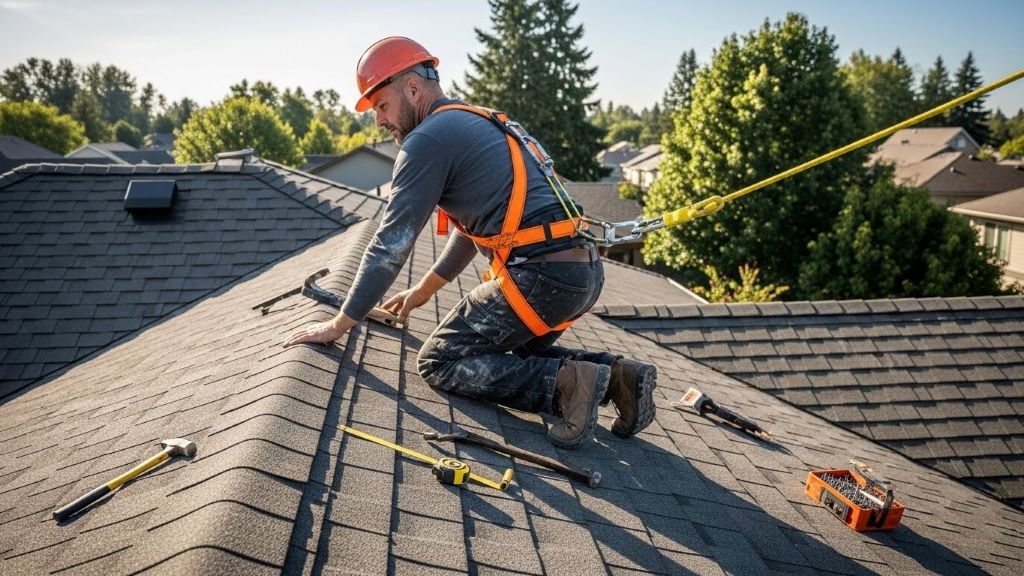
Personal fall arrest systems include harnesses, lanyards, and anchor points. Workers wear harnesses connected to secure anchor points on the roof structure. This method works well when other systems prove impractical. Nevertheless, it requires proper training and constant vigilance.
Warning line systems create boundaries on flat roofs. These lines alert workers when they approach dangerous edges. Contractors often combine warning lines with other protection methods for comprehensive safety.
Installation Requirements and Specifications
Proper installation ensures edge protection systems function correctly. Guardrails must withstand specific force requirements. Top rails must support at least 200 pounds of force in any direction. Mid rails and toe boards have similar strength requirements.
The distance between components matters significantly. Top rails typically sit 42 inches above the walking surface. Mid rails position halfway between the top rail and the walking surface. Toe boards must stand at least 3.5 inches high to prevent tools and materials from sliding off.
Anchor points for personal fall arrest systems need careful engineering. These points must support at least 5,000 pounds per attached worker. Additionally, qualified professionals should inspect all anchor points before use.
Residential vs Commercial Requirements
Residential and commercial projects face different edge protection standards. Commercial projects typically involve more workers and greater complexity. Therefore, they often require more comprehensive protection systems.
Residential roof replacements still demand proper safety measures. Many contractors use personal fall arrest systems on residential projects. The smaller scale makes these systems more practical. However, guardrails work well on larger residential buildings with accessible roof perimeters.
State and local building codes may impose additional requirements. Some municipalities have stricter standards than federal OSHA regulations. Consequently, contractors must research local requirements before starting work.
Weather Considerations and Temporary Protection
Weather conditions affect edge protection requirements and installation. Strong winds can compromise temporary guardrail systems. Contractors must secure all components against wind loads expected in their area.
Rain and ice create additional slip hazards near roof edges. Edge protection becomes even more critical during adverse weather. Many contractors postpone roof work during severe weather rather than risk worker safety.
Temporary protection must remain in place throughout the project. Removing barriers prematurely exposes workers to unnecessary danger. The last worker leaving the roof should be the one removing edge protection systems.
Inspection and Maintenance Protocols
Regular inspections keep edge protection systems functioning properly. Contractors should inspect systems daily before work begins. Additionally, inspections should occur after any incident that could damage components.
Damaged guardrails or worn harnesses require immediate replacement. Using compromised equipment defeats the purpose of edge protection. Moreover, it exposes contractors to liability if accidents occur.
Documentation of inspections protects both workers and contractors. Written records demonstrate compliance with safety regulations. These records become invaluable if questions arise about site safety practices.
Cost Considerations and Budget Planning
Edge protection systems represent necessary project costs. Contractors should include these expenses in initial project estimates. The cost varies based on system type, building size, and project duration.
Guardrail systems typically cost less than elaborate safety net installations. Personal fall arrest equipment requires initial investment but works across multiple projects. Therefore, contractors who regularly perform roof work often invest in quality fall protection equipment.
Skipping edge protection to save money proves penny wise and pound foolish. Worker injuries cost far more than protection systems. Furthermore, OSHA violations carry substantial fines that exceed equipment costs.
Training Requirements for Workers
Proper training ensures workers use edge protection systems correctly. OSHA requires training for workers using personal fall arrest systems. This training covers equipment inspection, proper wearing of harnesses, and emergency procedures.
Workers must understand the limitations of each protection system. Guardrails provide passive protection but don’t prevent workers from climbing over them. Personal fall arrest systems only work when properly connected to adequate anchor points.
Retraining should occur when workers switch between different protection systems. Additionally, refresher training helps maintain awareness and proper safety habits.
Legal Liability and Compliance
Property owners and contractors share responsibility for worksite safety. Failure to provide adequate edge protection can result in serious legal consequences. OSHA inspectors regularly visit construction sites and issue citations for violations.
Citations for fall protection violations rank among the most common OSHA penalties. These fines start at thousands of dollars and increase for willful or repeated violations. Beyond fines, accidents can lead to criminal charges and civil lawsuits.
Insurance companies scrutinize safety practices when processing claims. Inadequate edge protection may void coverage for workplace injuries. Therefore, maintaining proper protection systems protects both workers and business interests.
Future Trends in Edge Protection Technology
Edge protection technology continues evolving with improved materials and designs. Modern guardrail systems use lightweight aluminum components that install quickly. These systems maintain strength requirements while reducing setup time and labor costs.
Smart monitoring systems now alert supervisors when workers approach unprotected edges. Wearable technology tracks worker locations and sends warnings when danger zones are entered. These innovations add extra safety layers beyond traditional physical barriers.
The construction industry increasingly emphasizes prevention over reaction. Companies recognize that investing in comprehensive edge protection reduces accidents, improves productivity, and protects their reputation. According to safety experts and industry publications, preventing falls remains a top priority for construction safety initiatives.
Conclusion
Roof replacement edge protection requirements exist to prevent tragic accidents and save lives. These systems include guardrails, safety nets, personal fall arrest equipment, and warning lines. OSHA and local regulations mandate specific standards that contractors must follow. Proper installation, regular inspection, and thorough worker training ensure systems function effectively. While edge protection adds project costs, these expenses pale compared to injury costs and legal liability. Both residential and commercial projects require appropriate protection measures tailored to specific conditions. Understanding and implementing proper edge protection demonstrates commitment to worker safety and regulatory compliance.
Frequently Asked Questions
What height requires edge protection during roof replacement?
OSHA requires fall protection for workers at heights of six feet or more. However, some state and local codes set lower thresholds. Always check regulations in your specific jurisdiction before beginning roof work.
Can homeowners skip edge protection for DIY roof replacement?
While OSHA regulations primarily apply to employers and contractors, homeowners should still use edge protection. Falls cause severe injuries regardless of who performs the work. Additionally, some local codes require protection even for DIY projects.
How much does edge protection equipment cost for a typical residential roof?
Personal fall arrest systems cost between $200 and $800 for basic setups. Temporary guardrail systems for residential projects typically range from $500 to $2,000 depending on roof size. Rental options reduce upfront costs for one-time projects.
Who is responsible for providing edge protection on a roof replacement project?
The general contractor or roofing company typically provides edge protection systems. Property owners should verify that contractors include proper safety equipment in their bids and maintain it throughout the project duration.
How often should edge protection systems be inspected during roof work?
Daily inspections should occur before work begins each day. Additionally, inspect systems after any weather events, impacts, or incidents that could compromise their integrity. Document all inspections in writing.
Related Topics:
Best Practices for Residential Roofing Maintenance
The Cost of Roofing: What to Expect When Budgeting for Repairs