
A garage door spring can snap with a sound like a gunshot, and the decision that follows is the real test: do you replace it yourself or call a professional? The diy vs professional garage door spring debate usually comes down to two numbers, the part price and the labor bill, plus one risk most homeowners underestimate. This article breaks down realistic costs, the tools involved, and the safety lines you should not cross. If you also want to understand how springs are matched to doors, TradeCarHub publishes practical maintenance guidance worth reading before you order anything.
Quick answer: Buy the exact replacement spring for your door and replace torsion springs in matched pairs if they are the same age. Depending on spring type and region, the part typically costs roughly $30 to $100, while professional installation commonly runs several hundred dollars including labor. Torsion springs store dangerous energy, so hire a professional unless you have the right winding bars, the knowledge, and a genuine comfort with the risk.
What is diy vs professional garage door spring?
The choice comes down to who turns the winding bars. Garage doors use two spring types. Torsion springs mount on a shaft above the door and twist to counterbalance its weight. Extension springs run along the horizontal tracks and stretch instead. Torsion springs store far more energy and demand specific tools and technique. Extension springs are simpler but still under load and still capable of causing injury.
Doing it yourself means sourcing the correct spring, securing the door, releasing tension safely, installing the new part, and recalibrating the balance. You also need to confirm the door opens and closes evenly and that the safety reverse works.
Professional replacement looks different. A technician arrives with the right spring on the truck, winds the new spring to spec, tests the door’s balance, and checks the opener’s safety features. Labor usually takes under two hours for a torsion spring on a standard door.
The two paths also differ in what you are really buying. A DIY job trades your time and risk for savings on labor. A professional job trades money for speed, a warranty, and someone else absorbing the wounding risk.
| Factor | DIY | Professional |
|---|---|---|
| Typical part cost | About $30–$100 | Included in quote |
| Typical total | Part plus tools | Commonly several hundred dollars |
| Time involved | Several hours for a first attempt | Usually same-day service |
| Warranty | None on your labor | Often offered on parts and work |
| Injury risk | High with torsion springs | Low, handled by trained techs |
Key takeaway: The honest comparison is not just dollars. It is dollars against hours, tools, and injury risk.
Why diy vs professional garage door spring matters
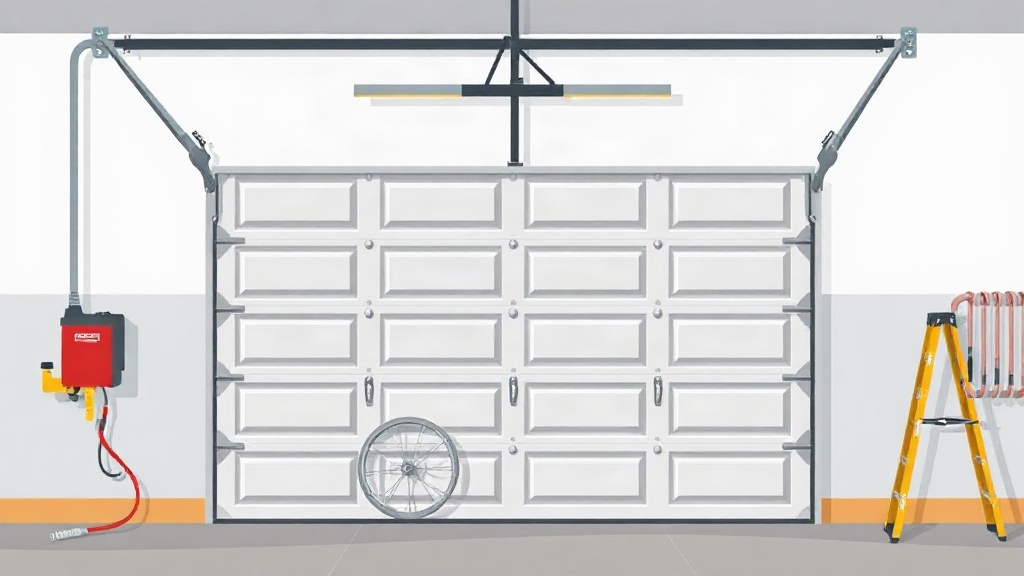
Getting this decision wrong can cost far more than the job itself. A torsion spring under full tension holds enough stored energy to break bones or cause serious cuts if it releases unexpectedly. That is not a scare tactic; it is why technicians treat winding as the most dangerous part of the trade. The risk is why many manufacturers and installers advise against torsion spring work for homeowners.
Cost matters too, but the math is often closer than people expect. A failed DIY attempt that damages the shaft, cables, or door panels can erase the savings entirely. So can a spring wound to the wrong tension, which strains the opener and shortens its life.
There is also the question of the right part. A spring is matched to the door’s weight, height, and cycle life. Ordering the wrong gauge or length leaves the door unbalanced or the spring short-lived. Matching springs accurately is a detailed job, and a guide to garage door spring weights helps you read color codes and sizes before you buy. Get this wrong and the door may not stay open, may close too fast, or may strain the opener.
Time and disruption round out the picture. A professional replacement often finishes in a single visit. A DIY attempt may stretch across a weekend, leave the car trapped, and require a second trip for the right hardware.
Key takeaway: The stakes are physical safety first, money second, and convenience third. Weigh them in that order.
Best practices
Whether you hire out or go ahead yourself, a few practices protect your budget and your door.
Start with correct identification
Write down the door’s make and model, measure the spring’s inside diameter, wire size, and length, and note the color code on the winding cone. This information determines the right replacement and prevents guesswork at the store.
Replace torsion springs in pairs
Matched springs wear at similar rates. If one breaks, the other is usually close behind. Replacing both at once avoids a second labor charge or a second DIY session within months.
Compare quotes on equal terms
Ask each professional for the spring brand, an estimated cycle life, whether labor and disposal are included, and the warranty terms. A lower quote on a shorter-life spring is not necessarily cheaper over time.
[!NOTE] Spring lifespan is rated in cycles, not years. A door used four times a day accumulates cycles far faster than one used twice.
Never leave the door in a risky state
If you cannot finish the job, call a professional rather than leaving the door partially disassembled or a spring half-wound. A door hanging on one working spring is a hazard.
Test the finished job
After any replacement, lift the door halfway by hand. It should stay put. Run the opener and confirm the safety reverse stops and reopens the door when it meets an obstruction.
Key takeaway: Precision in identifying the part and care in testing the result matter more than speed on either path.
Common mistakes to avoid
Many problems trace back to a handful of avoidable errors.
- Winding a torsion spring without proper winding bars. Screwdrivers and improvised tools slip under load. Use only the correct bars if you proceed at all.
- Assuming both spring types are equally safe. Extension springs can be handled by a careful homeowner more often than torsion springs, but they still carry risk and need containment cables.
- Buying a spring by appearance alone. Two springs can look identical and carry different tension ratings. Match by measured dimensions and color code.
- Skipping the safety reverse check. A door that closes on an object is a serious hazard. Test the opener’s reversal function after any work.
- Ignoring the opener’s limits. A new spring changes how the door balances, so the opener’s travel and force settings may need adjustment.
- Choosing the cheapest quote blindly. Confirm what the price covers, including disposal and warranty, before comparing.
- Leaving the car parked under a broken door. If a spring has failed, keep the door closed and clear of traffic until it is fixed.
[!WARNING] Do not try to open a garage door with a broken torsion spring. The door can drop suddenly once the opener lifts it.
A final mistake is delaying the repair. A door running on a failing spring strains the opener and cables, which turns a spring replacement into a larger bill.
Key takeaway: Most bad outcomes come from rushing, guessing at part fit, or skipping the safety checks at the end.
FAQ
Is it cheaper to replace a garage door spring myself?
Usually yes on paper. You pay only for parts and any tools you lack, while professional quotes include labor and service. The savings shrink if you buy the wrong spring or cause collateral damage.
Can I replace just one torsion spring?
You can, but most technicians recommend replacing both when they are the same age. The second spring is likely near the end of its life, and pairing new with old unbalances the door.
How long does a professional replacement take?
Most standard torsion spring replacements finish within a couple of hours, including testing and adjustment. A technician should also verify the door balances and the safety reverse works before leaving.
What does a professional replacement cost?
Cost varies by region, door size, and spring type, and it commonly runs several hundred dollars. Ask what the quote includes, such as the spring brand, labor, disposal, and warranty.
Are extension springs safer for DIY work?
Somewhat, because they stretch along the tracks rather than wind on a shaft. They still store energy and should have safety cables, so treat them with care.
Conclusion
The diy vs professional garage door spring choice balances real savings against real risk. Parts are inexpensive, but torsion springs demand the right tools, accurate identification, and steady technique. If you are unsure about any of those, hiring a professional is money well spent. If you proceed yourself, match the spring precisely, replace torsion springs in pairs, and test the door’s balance and safety reverse before regular use. Start by identifying your spring type and color code, then get two or three quotes so you can compare DIY costs with professional ones honestly.