
Most homes don’t become messy overnight. Clutter builds slowly through small habits repeated daily. The problem is not laziness. It’s the lack of a structured cleaning routine that fits into real life. Without a system, cleaning feels endless and exhausting.
A daily home cleaning routine solves this problem by breaking tasks into small, repeatable actions. Instead of spending hours catching up every weekend, you maintain order in minutes each day. This approach reduces stress, improves productivity, and keeps your home consistently comfortable.
This guide explains a practical daily cleaning routine that saves time without requiring expensive tools or long schedules. You’ll learn what to clean, when to clean it, and how to organize tasks efficiently so cleaning becomes automatic instead of overwhelming.
What Is a Daily Home Cleaning Routine That Saves Time?
A daily home cleaning routine that saves time is a structured sequence of short cleaning tasks completed morning, afternoon, and evening. It focuses on high-impact areas like surfaces, dishes, floors, and clutter zones to prevent buildup, reduce deep-cleaning needs, and maintain a consistently organized home with minimal effort.
A daily cleaning routine works because it prevents mess accumulation before it becomes difficult to manage. Instead of waiting until the weekend, you maintain cleanliness through small, repeatable actions.
Time-saving routines rely on consistency rather than intensity. Cleaning for 15–25 minutes daily produces better results than cleaning three hours once per week.
Efficient routines also reduce decision fatigue. You don’t waste time wondering what to clean. You follow a simple checklist.
Most successful routines focus on three categories:
- Visible surfaces
- High-traffic areas
- Clutter hotspots
When these stay clean, your home always looks organized even if deep cleaning is pending.
This strategy is used by professional organizers because maintaining visual order creates the impression of overall cleanliness while reducing long-term maintenance effort.
Why Do Most Cleaning Routines Waste Time?
Most cleaning routines waste time because they rely on large weekly sessions instead of short daily actions. This causes clutter accumulation, increases task difficulty, and forces repeated cleaning of the same areas instead of preventing mess through consistent maintenance habits.
Traditional cleaning advice encourages people to assign one large task per day. While structured, this approach often fails because life interrupts schedules.
Miss one cleaning day and the entire plan collapses.
Another problem is cleaning without priority order. Many people start with low-impact areas like decorative shelves instead of kitchens or entryways.
Time-saving routines always begin with high-return areas:
- Kitchen counters
- Dining surfaces
- Bathroom sinks
- Living room clutter
- Floors in walkways
Cleaning these first creates visible improvement quickly.
Another major time-waster is switching tools frequently. Efficient routines group tasks by cleaning method instead of room location.
For example:
- Wipe all surfaces at once
- Collect trash in one round
- Sweep all floors together
This reduces movement and saves minutes daily.
What Should Be Included in a Daily Cleaning Checklist?
A daily cleaning checklist should include dishwashing, surface wiping, clutter reset, trash removal, floor sweeping in busy zones, and bathroom touch-ups. These tasks prevent buildup, maintain hygiene, and reduce weekly deep-cleaning workload while keeping cleaning sessions under 30 minutes per day.
A strong checklist keeps cleaning predictable and fast. Without a checklist, people skip important maintenance steps.
The most efficient daily cleaning routine follows three timing blocks.
Morning Tasks (5–10 minutes)
- Make the bed
- Open windows for airflow
- Wipe bathroom sink
- Put away misplaced items
Afternoon Reset (5 minutes)
- Wash dishes immediately after meals
- Clean kitchen counters
- Return items to storage areas
Evening Reset (10 minutes)
- Sweep kitchen floor
- Empty trash if needed
- Organize living room
- Prepare next-day essentials
This structure spreads effort evenly across the day instead of concentrating work in one exhausting session.
Consistency matters more than perfection. Even partial completion keeps your home under control.
How Can You Clean Your Home in 20 Minutes Per Day?
You can clean your home in 20 minutes per day by dividing tasks into three short sessions, prioritizing visible surfaces, using multi-purpose cleaners, and following the same sequence daily. This reduces decision-making time and prevents clutter accumulation across kitchens, bathrooms, and living spaces.
A 20-minute routine works best when tasks follow the same order every day.
Routine creates speed through repetition.
Here is a proven 20-minute cleaning structure:
| Time Block | Task | Duration |
|---|---|---|
| Morning | Bed making and bathroom wipe | 5 minutes |
| Afternoon | Kitchen reset and dishes | 7 minutes |
| Evening | Living room tidy and floor sweep | 8 minutes |
Using multipurpose cleaning spray instead of separate products reduces switching time.
Keeping supplies in each room also improves efficiency.
Professional cleaners follow a “top-to-bottom” rule. Always clean higher surfaces before floors. This prevents repeating tasks.
Another speed technique is the “two-hand rule.” Always carry two items while moving between rooms.
Small habits reduce total workload dramatically.
Which Cleaning Tasks Prevent the Most Mess?
The cleaning tasks that prevent the most mess include dishwashing after meals, wiping kitchen counters, returning items immediately after use, managing entryway clutter, and resetting living areas nightly. These actions stop dirt buildup and reduce the need for frequent deep-cleaning sessions.
Preventive cleaning is more efficient than corrective cleaning.
Some tasks produce disproportionate results compared to the effort required.
High-impact prevention tasks include:
- Cleaning dishes immediately after eating
- Wiping sinks after use
- Sorting laundry daily
- Clearing entryway shoes
- Resetting coffee tables nightly
The kitchen produces most visible clutter in homes. Keeping it clean improves the appearance of the entire house.
Entryways also accumulate fast clutter. Installing storage baskets or hooks reduces this problem.
Even a five-minute evening reset prevents next-day cleaning overload.
How Do You Organize Cleaning Supplies for Maximum Efficiency?
Organizing cleaning supplies for efficiency involves storing multipurpose cleaners in frequently used rooms, using portable cleaning caddies, labeling storage bins, and minimizing product variety. This reduces preparation time, prevents interruptions, and ensures cleaning tasks are completed faster and more consistently.
Supply placement affects cleaning speed more than most people realize.
If tools are difficult to access, tasks get delayed.
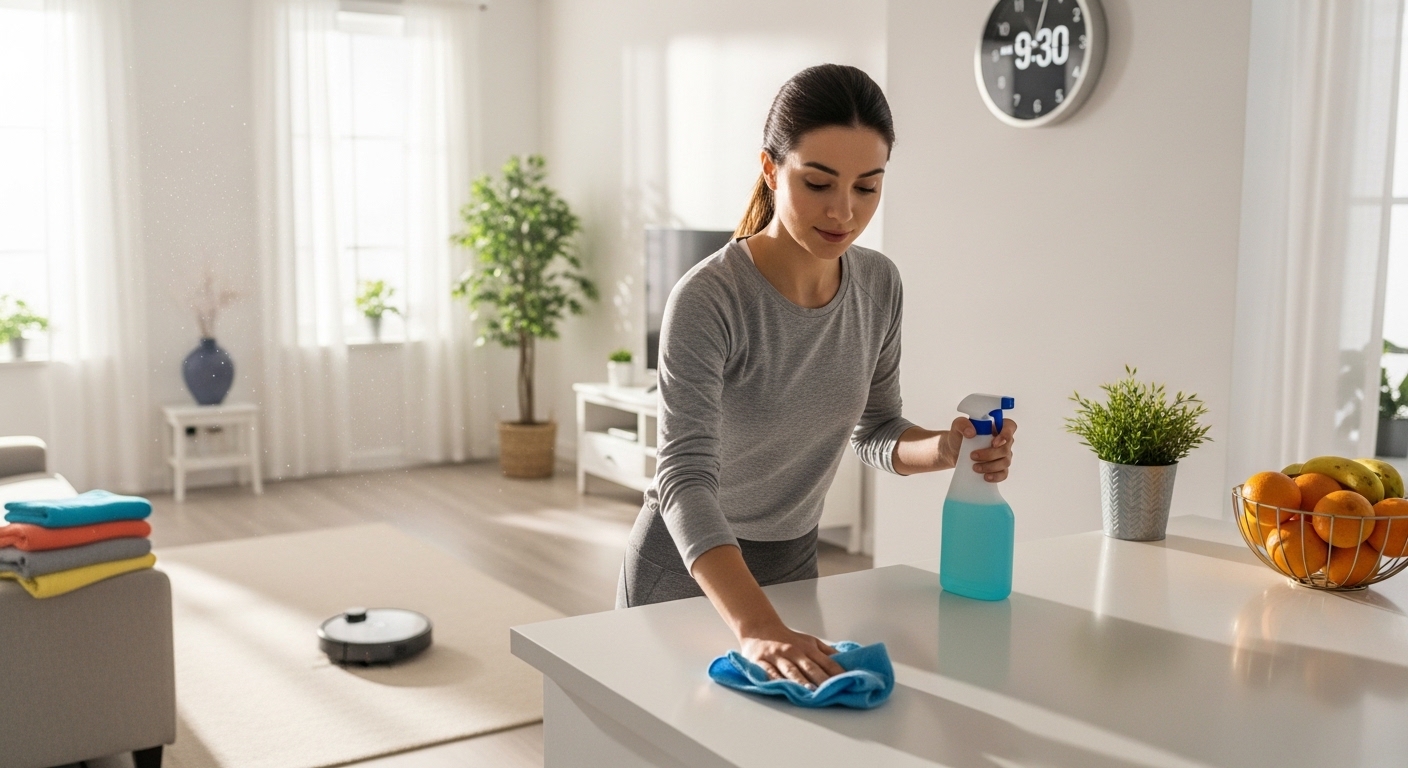
An efficient cleaning kit should include:
- Microfiber cloths
- Multipurpose spray
- Glass cleaner
- Hand vacuum
- Disinfectant wipes
Store separate mini kits in:
- Kitchen
- Bathroom
- Living room cabinet
This eliminates the need to walk between rooms searching for supplies.
Professional cleaners call this “point-of-use storage.” It reduces cleaning time significantly.
Limiting products also prevents confusion and improves consistency.
What Weekly Tasks Support a Daily Cleaning Routine?
Weekly tasks that support daily cleaning routines include vacuuming entire floors, changing bed sheets, disinfecting bathrooms deeply, dusting furniture thoroughly, and cleaning appliances. These tasks prevent hidden dirt accumulation and maintain long-term cleanliness without increasing daily workload.
Daily routines maintain order. Weekly routines maintain hygiene.
Combining both creates a complete system.
Essential weekly cleaning tasks include:
- Vacuum all rooms
- Wash bedding
- Clean mirrors
- Disinfect toilets
- Wipe appliances
- Mop floors
Assigning weekly tasks to specific days improves completion rates.
For example:
- Monday: laundry
- Wednesday: bathroom cleaning
- Friday: floors
This structure prevents weekend cleaning overload.
Consistency turns cleaning into routine behavior rather than effort-driven action.
How Can Families Maintain a Time-Saving Cleaning Routine Together?
Families maintain time-saving cleaning routines by assigning age-appropriate responsibilities, creating shared checklists, using short timed cleaning sessions, and building daily reset habits. Shared participation distributes workload evenly and improves consistency while teaching long-term organization skills.
Cleaning becomes easier when responsibility is shared.
Children can handle simple tasks like:
- Toy organization
- Bed making
- Book arrangement
Adults manage higher-effort cleaning tasks.
Using 10-minute family cleaning sessions increases participation.
Timers create urgency and reduce procrastination.
Visual checklists placed on walls improve accountability.
Shared routines also reduce conflict about household responsibilities.
Homes stay cleaner when cleaning becomes part of daily culture rather than a punishment or obligation.
Conclusion: What Is the Best Daily Cleaning Routine Strategy?
The most effective daily home cleaning routine focuses on consistency, prioritization, and prevention. Instead of waiting for mess to accumulate, short structured cleaning sessions maintain order throughout the day. This approach reduces stress, saves time, and improves living comfort without requiring long cleaning hours.
Start with a 20-minute daily checklist covering kitchens, bathrooms, and clutter zones. Add weekly maintenance tasks to prevent hidden dirt buildup. Organize cleaning tools for quick access and involve family members whenever possible.
The goal is not perfection. The goal is control.
When cleaning becomes predictable, it stops feeling overwhelming. A simple routine completed daily keeps your home consistently tidy with minimal effort.
Begin today by choosing three high-impact tasks and repeating them every morning and evening. Within one week, you will notice measurable improvements in both cleanliness and time savings.
Frequently Asked Questions
How long should a daily cleaning routine take?
A daily cleaning routine should take between 15 and 30 minutes. Short sessions divided across morning, afternoon, and evening prevent clutter buildup and reduce the need for longer weekly cleaning sessions.
What is the fastest way to keep a house clean every day?
The fastest method is cleaning dishes immediately after meals, wiping surfaces daily, and resetting living areas before bedtime. These actions prevent mess accumulation and maintain visual cleanliness consistently.
Is daily cleaning better than weekly cleaning?
Daily cleaning is more effective for maintaining order because it prevents dirt accumulation. Weekly cleaning remains important for deep sanitation but works best when combined with daily maintenance routines.
What rooms should be cleaned daily?
Kitchens, bathrooms, entryways, and living rooms should be cleaned daily because they experience the highest traffic and accumulate visible clutter quickly.
Can a cleaning routine reduce stress?
Yes. Structured routines reduce decision fatigue and visual clutter, which improves mental focus and creates a more comfortable living environment.
What cleaning supplies are essential for daily routines?
Essential supplies include microfiber cloths, multipurpose cleaner, disinfectant wipes, a small vacuum, and a floor sweeper for quick maintenance tasks.
How do I stay consistent with daily cleaning?
Consistency improves when tasks follow the same order every day. Using checklists, timers, and supply stations inside each room helps maintain routine habits.
Read More Also: How to Select the Best Fishing Gear for Beginners
Learn More: How to Buy a Budget Humidifier That Still Works Efficiently