
Triple wide manufactured homes offer spacious living comparable to traditional houses. However, many owners struggle to achieve the polished exterior appearance that attracts buyers and impresses neighbors. Curb appeal significantly impacts property value and neighborhood perception.
Enhancing your triple wide’s exterior requires strategic improvements that overcome common manufactured home challenges. This guide provides actionable steps for transforming your property’s street presence through landscaping, exterior updates, and architectural enhancements.
Understanding Triple Wide Manufactured Home Curb Appeal Challenges
Triple wide manufactured homes span 40 to 50 feet wide, creating substantial street presence. Their larger footprint offers advantages over single and double wides. Nevertheless, typical manufactured home features can diminish curb appeal without proper attention.
Factory-standard vinyl skirting often appears flimsy and temporary. Metal steps lack the permanence of traditional home entryways. Additionally, minimal roof overhangs and simple trim details create boxy appearances lacking architectural interest.
The good news is triple wides provide ample space for transformative improvements. Their size accommodates substantial landscaping, covered porches, and architectural additions. Therefore, strategic investments yield dramatic curb appeal transformations.
Property location influences improvement priorities. Manufactured homes in land-lease communities face different standards than those on private land. However, both situations benefit from enhanced exterior aesthetics and increased property value.
Upgrading Skirting and Foundation Appearance
Skirting replacement delivers one of the most impactful curb appeal improvements. Standard vinyl skirting screams manufactured home from the street. Premium alternatives create the illusion of permanent foundations.
Brick or stone veneer skirting mimics traditional home foundations beautifully. These materials install over existing skirting frames relatively easily. Moreover, coordinating skirting with home exterior colors creates cohesive appearances.
Cement board skirting offers durability and paintability at moderate cost. Hardie board products withstand weather while accepting paint finishes. Additionally, cement board resists the warping and fading plaguing vinyl options.
Lattice skirting works well when disguised with landscaping. Install quality vinyl or wood lattice, then plant foundation shrubs to partially conceal it. This combination costs less while achieving attractive results through strategic plantings.
Ventilation remains critical regardless of skirting material choice. Ensure new skirting includes proper vents preventing moisture accumulation under the home. Therefore, consult installation guidelines specific to your climate zone.
Creating Permanent-Looking Entryways
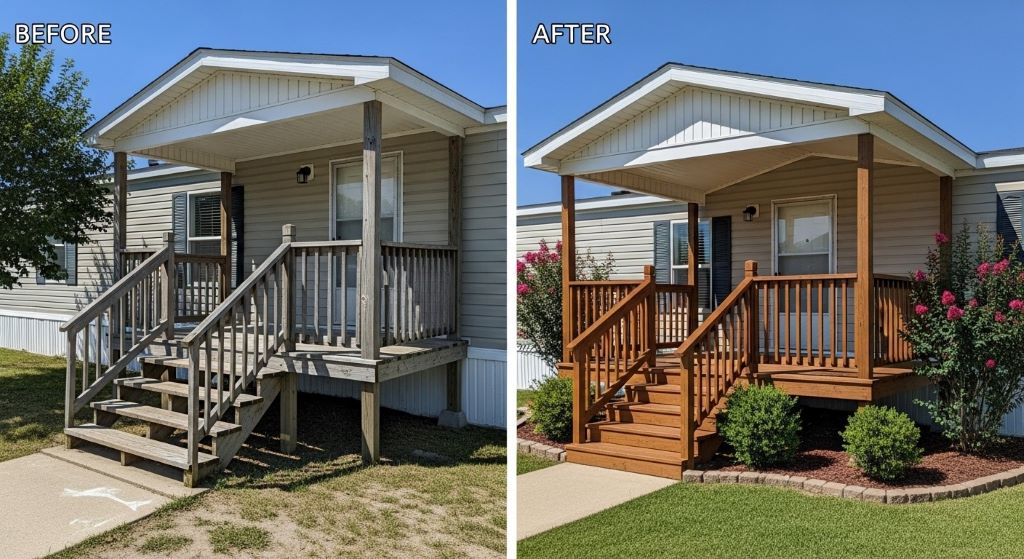
Metal steps announce manufactured home origins instantly. Replacing them with permanent structures dramatically improves curb appeal. This single upgrade often delivers the highest return on investment.
Wood decks create welcoming front entrances replacing temporary stairs. Build decks at least six feet deep and eight feet wide for functional gathering spaces. Additionally, incorporate built-in planters and seating for added charm.
Covered porches transform manufactured home facades completely. Extend rooflines over entry decks using posts and beams matching home trim. Moreover, porch roofs add architectural dimension previously lacking.
Brick or stone steps provide traditional elegance worthy of any home. These permanent installations anchor homes visually to their sites. However, professional installation ensures proper support and drainage.
Concrete steps finished with decorative treatments offer budget-friendly permanence. Stamped concrete mimics stone or brick at lower costs. Additionally, painted or stained concrete accepts colorful designs enhancing curb appeal.
Enhancing Architectural Details and Trim
Manufactured homes typically feature minimal trim and architectural details. Adding these elements creates visual interest and traditional home character. Fortunately, many improvements require basic carpentry skills and modest budgets.
Install window shutters sized and mounted correctly for authentic appearance. Functional or decorative shutters frame windows beautifully. Choose colors contrasting with siding while complementing roof tones. Moreover, ensure shutters match window widths rather than using one-size-fits-all options.
Add crown molding and corner boards to exterior walls. These trim elements break up large siding expanses and add dimension. Additionally, painting trim contrasting colors highlights architectural features.
Install decorative gable vents replacing basic rectangular versions. Ornamental vents in traditional styles add character to plain rooflines. Therefore, select designs complementing your home’s overall aesthetic.
Consider adding false dormers to rooflines for dramatic impact. These architectural elements suggest additional living space while creating interesting rooflines. However, ensure proportions suit your home’s size and style.
According to This Old House, well-chosen architectural details transform ordinary exteriors into homes with character and distinction.
Implementing Strategic Landscaping Plans
Landscaping disguises manufactured home characteristics while creating magazine-worthy curb appeal. Thoughtful plant selection and placement draws attention to attractive features while minimizing less desirable ones.
Foundation plantings soften the transition between home and ground. Layer shrubs of varying heights along the home’s base, keeping plantings lower beneath windows. Additionally, evergreens provide year-round screening of skirting areas.
Frame your home with shade trees positioned strategically. Plant large trees at front corners to anchor the structure visually. However, maintain adequate distance from the home preventing root damage and ensuring growth space.
Create defined landscape beds with permanent edging. Curved beds appear more natural than straight lines, adding visual interest. Moreover, mulched beds provide low-maintenance alternatives to extensive lawn areas.
Install a focal point tree or specimen plant in the front yard. Japanese maples, flowering dogwoods, or ornamental cherries create stunning centerpieces. Therefore, choose specimens suited to your climate and mature size appropriate for the space.
Add colorful annual flowers in containers and beds for seasonal impact. Coordinate bloom colors with home exterior tones for cohesive appearances. Additionally, rotate plantings seasonally maintaining continuous color.
Upgrading Exterior Siding and Paint
Fresh paint or siding replacement provides the most dramatic curb appeal transformation. Triple wides offer substantial surface area making this investment significant. However, results justify costs through improved appearance and property value.
Vinyl siding replacement updates tired exteriors with modern colors and textures. Today’s premium vinyl products mimic wood grain and offer rich color palettes. Moreover, insulated vinyl improves energy efficiency alongside aesthetics.
Fiber cement siding delivers durability and authentic wood appearance. Hardie board products accept paint in any color and resist rot, insects, and fire. Additionally, fiber cement adds perceived value matching traditional home construction.
Paint existing metal siding for budget-friendly refreshes. Proper surface preparation and quality exterior paint systems extend life significantly. Choose modern color schemes updating dated tones. However, ensure compatibility between paint and existing siding material.
Consider adding board and batten accents or wainscoting to break up expansive siding. These treatments add texture and traditional character. Therefore, coordinate accent colors creating sophisticated color blocking effects.
Installing Quality Roofing and Gutters
Roofing significantly impacts overall appearance yet often receives minimal attention. Upgrading roofing materials and adding proper gutters enhances both curb appeal and home protection.
Replace basic three-tab asphalt shingles with architectural shingles. Dimensional shingles create depth and texture visible from the street. Additionally, extended warranties protect your investment longer than standard products.
Metal roofing offers longevity and distinctive appearance. Standing seam metal roofs suggest quality construction and modern sensibility. Moreover, metal roofing increases energy efficiency through superior heat reflection.
Install seamless gutters and decorative downspouts if currently lacking. Gutters protect foundations while adding finished appearances. Choose colors matching trim or contrasting attractively with siding. Additionally, consider decorative gutter brackets as architectural details.
Add roof overhangs if your home lacks adequate eaves. Extended overhangs protect siding from weather while adding architectural shadow lines. However, structural modifications require professional engineering and installation.
Improving Driveways and Walkways
Driveways and walkways significantly impact first impressions. These hardscape elements guide visitors while establishing property character. Therefore, strategic improvements create polished, welcoming appearances.
Replace gravel driveways with paved surfaces when possible. Asphalt or concrete driveways suggest permanence and care. Additionally, sealed surfaces prevent mud tracking and reduce maintenance.
Add pavers or stamped concrete for distinctive character. These decorative treatments cost more than plain concrete but deliver exceptional curb appeal. Moreover, pavers come in endless patterns and colors coordinating with home exteriors.
Install lighted walkways leading to front entrances. Solar path lights offer affordable options requiring no electrical work. Additionally, well-lit pathways enhance safety alongside aesthetics.
Edge driveways and walks with landscaping or decorative borders. Defined edges create tidy appearances preventing grass encroachment. Therefore, metal, stone, or brick edging adds polished finishing touches.
Adding Outdoor Lighting for Evening Appeal
Exterior lighting extends curb appeal beyond daylight hours. Strategic lighting highlights architectural features while improving security and safety. Moreover, proper lighting suggests quality and attention to detail.
Install coach lights flanking the front door for classic appeal. Traditional lantern styles suit most home exteriors. Choose fixture sizes proportional to door and porch dimensions. Additionally, coordinate finishes with door hardware and house numbers.
Add landscape lighting spotlighting specimen trees and architectural features. Uplighting creates dramatic evening effects highlighting your landscaping investments. However, avoid over-lighting creating harsh or garish appearances.
Install soffit lighting beneath porch overhangs and eaves. Recessed lights provide subtle illumination without visible fixtures. Moreover, soffit lighting creates welcoming glows around entryways.
Consider decorative post lights lining driveways or walkways. These fixtures add traditional charm while providing functional illumination. Therefore, select styles complementing other exterior lighting choices.
According to HGTV, well-designed outdoor lighting increases home value while creating inviting evening ambiance.
Maintaining Lawns and Outdoor Spaces
Immaculate lawn care completes curb appeal improvements. Neglected landscaping undermines even the most impressive structural upgrades. Therefore, consistent maintenance protects your improvement investments.
Mow regularly maintaining consistent height appropriate for grass type. Avoid cutting more than one-third of blade height per mowing. Additionally, sharp mower blades create clean cuts promoting healthy growth.
Edge along walkways, driveways, and landscape beds weekly. Crisp edges create manicured appearances distinguishing well-maintained properties. Moreover, edging takes minutes but dramatically improves overall impressions.
Control weeds promptly before they establish and spread. Hand-pull weeds from beds and treat lawn weeds appropriately for grass type. Additionally, thick, healthy lawns naturally suppress weed growth.
Water deeply and infrequently encouraging deep root systems. Early morning watering reduces disease while ensuring plants access moisture. However, adjust watering schedules based on rainfall and seasonal needs.
Remove debris, fallen branches, and clutter from yards immediately. Tidy outdoor spaces suggest pride of ownership and attention to detail. Therefore, weekly property walkthroughs identify and address emerging issues.
Coordinating Color Schemes Thoughtfully
Cohesive color schemes unify improvements creating polished, intentional appearances. Manufactured homes often feature builder-basic color combinations lacking sophistication. Strategic repainting transforms dated palettes into contemporary statements.
Choose main siding colors from neutral palettes with broad appeal. Grays, beiges, taupes, and soft whites create timeless backdrops. Additionally, neutral bases accommodate changing accent colors over time.
Select accent colors for trim, shutters, and doors creating visual interest. Use color wheels identifying complementary or analogous color schemes. Moreover, limit palettes to three colors maximum preventing busy appearances.
Consider regional preferences and neighborhood standards when selecting colors. Coastal areas favor different palettes than mountain or desert regions. However, express personality while maintaining reasonable conformity with surroundings.
Test paint colors on large boards before committing. View samples in various lighting conditions throughout the day. Additionally, observe how colors interact with fixed elements like roofing and stonework.
Conclusion
Increasing curb appeal of triple wide manufactured homes requires strategic improvements addressing common aesthetic challenges. Foundation upgrades, permanent entryways, enhanced architectural details, and thoughtful landscaping transform basic exteriors into attractive properties. Additionally, quality roofing, coordinated color schemes, and meticulous maintenance protect improvement investments while maximizing property value. Therefore, homeowners should prioritize upgrades delivering greatest visual impact within available budgets. The combination of structural enhancements and consistent upkeep creates welcoming, valuable homes rivaling traditional construction in street appeal and neighborhood presence.
Frequently Asked Questions
How much does it cost to improve curb appeal of a triple wide manufactured home?
Costs range from $5,000 for basic landscaping and paint to $50,000 for comprehensive upgrades including siding, roofing, and permanent porches. Most homeowners spend $15,000 to $25,000 on impactful improvements like skirting replacement, entry upgrades, and strategic landscaping.
What curb appeal improvement offers the best return on investment?
Entry upgrades including permanent steps and covered porches typically deliver the highest returns, often recouping 75 to 100 percent of costs. Professional landscaping and fresh paint also provide excellent returns while making homes significantly more attractive to buyers.
Can I increase my manufactured home’s value through curb appeal improvements?
Yes, strategic curb appeal improvements can increase triple wide values by 10 to 20 percent. Homes on owned land benefit most, though improvements also enhance resale values in manufactured home communities. Quality upgrades also reduce market time significantly.
Do I need permits for curb appeal improvements to my manufactured home?
Many improvements like landscaping and painting require no permits. However, structural changes including porches, decks, skirting replacement, and roofing typically require permits. Additionally, manufactured home communities may require approval before exterior modifications.
How can I make my triple wide look less like a manufactured home?
Replace vinyl skirting with brick or stone veneer, add permanent entry porches, install window shutters, enhance trim details, and implement substantial landscaping. Additionally, upgrading to premium siding and architectural shingles creates traditional home appearances.
Related Topics:
BaGua Map Mastery: A Deep Dive into the Eight Trigrams
The Eclectic Edge: Curating a Home That Tells Your Story