
Lighting plays a pivotal role in setting the mood and ambiance of any space. Kitchens and dining rooms, often the heart of the home, deserve special attention when it comes to illumination. While a practical, bright kitchen demands task lighting, a dining area ambiance thrives on warmth and style. Pairing kitchen and dining lights harmoniously is a touch of design magic that can make these spaces more functional and welcoming.
Understanding Lighting Basics
Before diving into pairing your fixtures, let’s brush up on some lighting fundamentals:
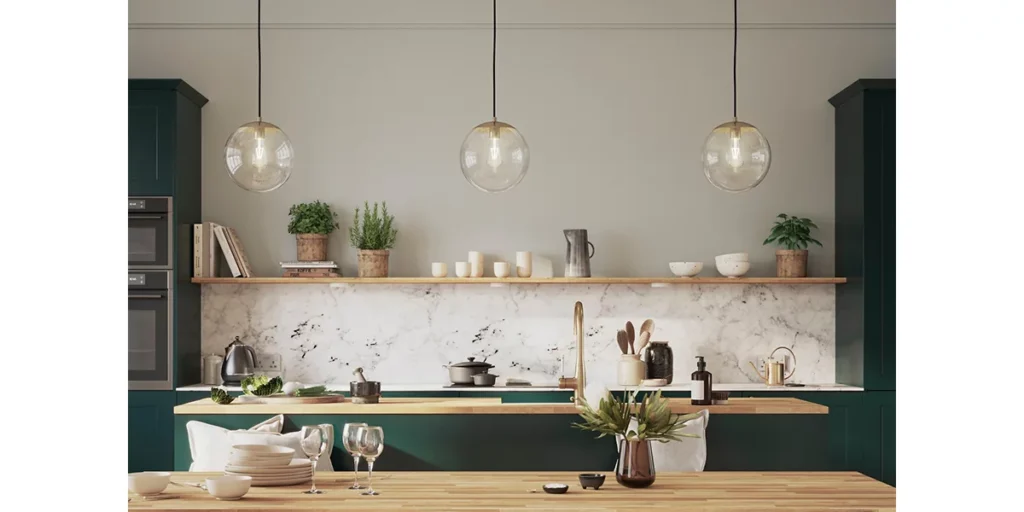
- Types of Lighting:
- Ambient lighting: Provides overall illumination for everyday tasks (think: recessed lights, central ceiling fixtures).
- Task lighting: Concentrates light on specific work areas (think: under-cabinet lights, countertop pendants).
- Accent lighting: Creates visual interest by highlighting architectural features or artwork (think: track lights, wall sconces).
- Color Temperature: Measured in Kelvins (K), color temperature influences the ambiance of a space:
- Warm white (2700K-3000K): Cozy and inviting, ideal for dining areas.
- Cool white (3500K-4100K): Bright and crisp, best for task-oriented kitchen areas.
- Daylight (5000K-6500K): Mimics natural sunlight, can be used for task lighting in kitchens.
The Art of Pairing
Pairing kitchen and dining room lights is a balance of practicality, aesthetics, and personal preference. Here are some key guidelines:
- Coordinate, Don’t Match: Aim for a sense of cohesion rather than strictly matching fixtures. Think complementary shapes, finishes, and materials.
- Consider Scale and Proportion: The size of your fixtures should be appropriate for the dimensions of both your kitchen and dining areas. Smaller pendants work well over kitchen islands, while a statement chandelier can anchor a dining area.
- Layer Your Lighting: A winning combination incorporates ambient, task, and accent lighting in both spaces. Recessed lights with dimmers offer flexibility in the kitchen, while a chandelier creates a focal point in the dining area.
- Mix Finishes Tastefully: Incorporating various metals or textures can add depth and interest. Pairing brushed nickel pendants over a kitchen island with a bronze chandelier in the dining area can be both elegant and inviting.
- Choose Your Style: The overall design of your fixtures should align with your decor theme. Modern kitchens pair well with sleek pendants, while a rustic dining space might benefit from a wrought-iron chandelier.
Using High-Impact Windows and Doors to Increase Home Security
Pairing Suggestions for Different Styles
- Modern Minimalist – Clean lines, simple forms. Consider linear pendants in a black matte finish for the kitchen island, paired with a single oversized geometric chandelier in the dining space.
- Transitional – Blending traditional and contemporary elements. Try brushed nickel pendants over the kitchen counter with a drum-shaded chandelier accented with brass details in the dining area.
- Industrial Farmhouse – Rustic and utilitarian. Incorporate exposed-bulb pendants with Edison bulbs above a kitchen island and a distressed metal chandelier over your farmhouse dining table.
Additional Tips For the Adventurous
- Make a Statement: If you’re feeling bold, experiment with a vibrant, colorful chandelier in your dining area to add drama and personality.
- Consider Smart Lighting: Smart systems allow you to control light intensity and color temperature, creating a custom ambiance for any occasion.
- Go Green: Embrace energy-efficient LED fixtures to save money on utility bills while doing your part for the planet.
- Consult a Professional: For more complex spaces, a certified lighting designer can offer tailored solutions that fit your unique needs and vision.
Final Thoughts
Pairing kitchen and dining lights can elevate your home, adding a layer of sophistication and comfort. While adhering to a few core design principles and unleashing a touch of creativity, you’ll transform both spaces into havens of both practicality and personality. Remember, lighting has the power to transform the ordinary into the extraordinary.