
Swimming pools, those shimmering oases of relaxation and recreation, require meticulous maintenance to remain inviting and safe. Beyond the aesthetic appeal, proper cleaning is crucial for preventing the proliferation of harmful bacteria, algae, and other contaminants that can compromise water quality and pose health risks. This article delves into the intricate processes involved in cleaning swimming pools, exploring the various methods, technologies, and best practices that ensure a pristine aquatic environment.
The Foundation: Understanding Pool Contaminants
Before we explore cleaning methods, it’s essential to understand the adversaries we’re combatting.
Swimming pools are constantly exposed to a variety of contaminants, including:
- Organic Matter: Leaves, twigs, insects, pollen, and even skin cells and hair contribute to organic debris, providing a breeding ground for bacteria and algae.
- Algae: Microscopic organisms that thrive in warm, nutrient-rich water, algae can quickly turn a pool green, cloudy, or even black.
- Bacteria and Pathogens: Introduced by swimmers, animals, or environmental factors, bacteria like E. coli and Pseudomonas aeruginosa can cause infections and illnesses.
- Minerals and Metals: Dissolved minerals like calcium and iron, as well as metals from pipes and equipment, can stain pool surfaces and affect water clarity.
- Sunscreen and Body Oils: These substances can create a greasy film on the water’s surface and clog filters.
- Debris: Dirt, sand, and other particulate matter that accumulates in the pool.
The Multi-Layered Approach: Cleaning Processes Explained
Cleaning a swimming pool involves a multi-layered approach, encompassing physical removal of debris, chemical treatment, and filtration.
-
Physical Cleaning: Removing Visible Debris
- Skimming: Regularly skimming the pool surface with a leaf skimmer removes floating debris before it sinks, preventing it from decomposing and contributing to water contamination. This simple yet crucial step should be performed daily or as needed.
- Brushing: Brushing the pool walls and floor with a specialized pool brush dislodges algae, dirt, and mineral deposits that cling to surfaces. This helps prevent staining and ensures that chemical treatments can effectively reach and neutralize contaminants. Brushing should be done at least once or twice a week.
- Vacuuming: Vacuuming the pool floor removes settled debris, including leaves, sand, and dirt. Pool vacuums can be manual, semi-automatic, or robotic. Manual vacuums require guiding the vacuum head along the pool floor, while semi-automatic and robotic vacuums operate independently. Robotic vacuums are the most efficient, as they can scrub and vacuum the entire pool, including walls, autonomously.
-
Chemical Treatment: Maintaining Water Balance and Sanitization
- Chlorination: Chlorine is the most common pool sanitizer, effectively killing bacteria and algae. It’s available in various forms, including liquid chlorine, tablets, and granular chlorine. Maintaining the correct chlorine level (typically 1-3 ppm) is crucial for effective sanitization.
- Bromination: Bromine is another effective sanitizer, particularly suitable for spas and hot tubs due to its stability at higher temperatures. It’s gentler on the skin and eyes than chlorine but can be more expensive.
- Saltwater Chlorination: Saltwater pools use a salt chlorine generator to convert dissolved salt into chlorine. This system provides a continuous source of chlorine, reducing the need for manual chlorination.
- pH Balancing: Maintaining the correct pH level (typically 7.4-7.6) is essential for effective sanitization and swimmer comfort. pH imbalances can cause irritation, cloudy water, and damage to pool equipment.
- Alkalinity Control: Total alkalinity (TA) acts as a buffer, preventing rapid pH fluctuations. Maintaining the correct TA level (typically 80-120 ppm) is crucial for pH stability.
- Shocking: Shocking the pool involves adding a high dose of chlorine or a non-chlorine shock treatment to oxidize organic contaminants and eliminate combined chlorine (chloramines), which causes eye irritation and a strong chlorine odor.
- Algaecides: Algaecides are used to prevent and control algae growth. They are available in various formulations, including copper-based, quaternary ammonium, and poly quaternary ammonium algaecides.
- Clarifiers and Flocculants: Clarifiers and flocculants are used to improve water clarity by causing small particles to clump together, making them easier to filter or vacuum. Clarifiers work by coagulating small particles, while flocculants cause larger particles to settle to the bottom of the pool.
-
Filtration: Removing Suspended Particles
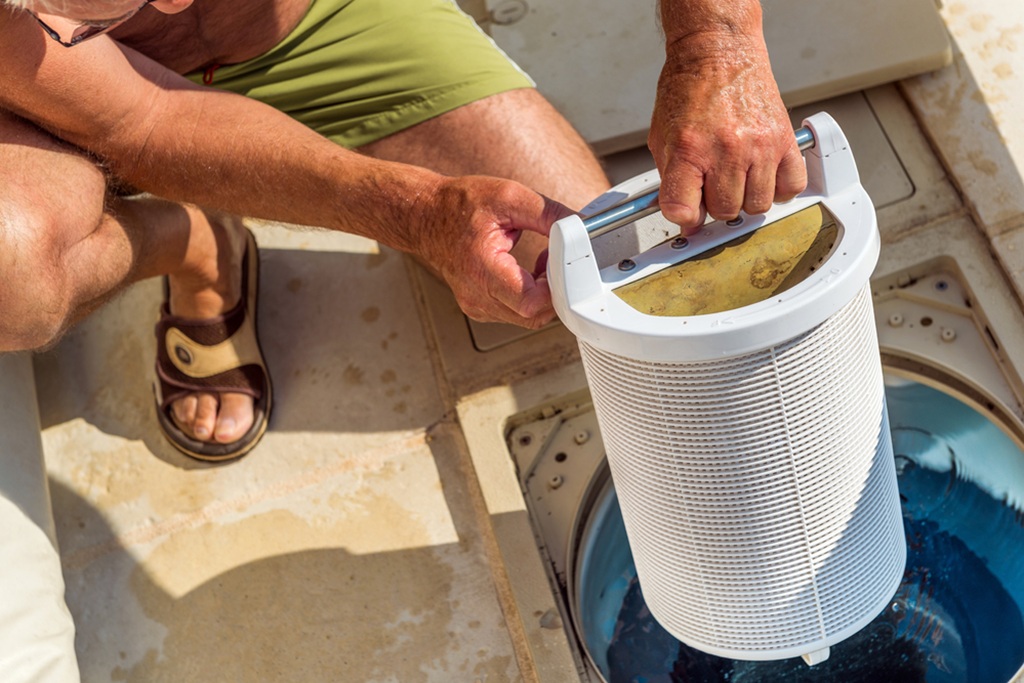
- Sand Filters: Sand filters use a bed of sand to trap suspended particles as water passes through. They are relatively inexpensive and easy to maintain but may not filter out very fine particles.
- Cartridge Filters: Cartridge filters use a pleated fabric cartridge to trap particles. They are more efficient than sand filters at removing fine particles but require more frequent cleaning.
- Diatomaceous Earth (DE) Filters: DE filters use a powder made from fossilized diatoms to trap very small particles. They are the most efficient type of filter but require more maintenance and careful handling of DE powder.
-
Circulation: Ensuring Even Distribution of Chemicals
- Pump and Plumbing: A properly functioning pump and plumbing system are essential for circulating water through the filter and distributing chemicals evenly. Regular inspection and maintenance of the pump, pipes, and valves are crucial for optimal performance.
- Proper Turnover Rate: The turnover rate refers to the time it takes for the entire volume of pool water to pass through the filter. A sufficient turnover rate (typically 2-3 times per day) ensures that all water is filtered and sanitized.
Related: How Much is a Pool Cleaning?
Advanced Technologies and Automation
Modern pool cleaning has embraced technology to enhance efficiency and convenience:
- Robotic Pool Cleaners: These autonomous devices can scrub, vacuum, and filter the pool, reducing manual labor and improving cleaning effectiveness.
- Automated Chemical Controllers: These systems monitor and adjust chemical levels automatically, ensuring optimal water balance and sanitization.
- Smart Pool Systems: These systems integrate various pool functions, allowing remote monitoring and control via smartphones or tablets.
Related:
People Also Ask (FAQs)
Q: How often should I clean my pool?
A: Daily skimming, weekly brushing and vacuuming, and bi-weekly water testing are recommended.
Q: What are the signs of an unhealthy pool?
A: Cloudy water, algae growth, strong chlorine odor, eye irritation, and slippery surfaces are signs of an unhealthy pool.
Q: Can I use household bleach in my pool?
A: While household bleach can be used, it’s not ideal. Pool-specific chlorine products are formulated for pool water chemistry and provide more consistent results.
Q: How do I get rid of algae in my pool?
A: Shock the pool, brush the walls and floor, and add an algaecide.
Q: What is the best way to prevent algae growth?
A: Maintain proper chlorine levels, pH balance, and alkalinity, and regularly brush and vacuum the pool.
Q: What are the benefits of a saltwater pool?
A: Saltwater pools are gentler on the skin and eyes, require less maintenance, and provide a more natural swimming experience.
Q: Can I clean my pool myself, or should I hire a professional?
A: Many pool owners successfully maintain their pools themselves. However, hiring a professional can provide peace of mind and ensure optimal water quality, especially for complex issues.
Conclusion
Maintaining a sparkling clean swimming pool requires a combination of physical cleaning, chemical treatment, filtration, and circulation. By understanding the underlying principles and implementing proper cleaning practices, you can create a safe and enjoyable aquatic environment for yourself and your loved ones. Whether you choose to tackle the tasks yourself or enlist the help of a professional, regular and diligent cleaning is essential for preserving the beauty and functionality of your pool. Modern pool technology has greatly simplified this work.