
Let’s be honest: walking into a small bedroom can sometimes feel less like entering a sanctuary and more like stepping into a storage closet with a bed squeezed in. Limited square footage presents a unique challenge. How do you fit everything you need – a bed, storage, maybe even a small workspace – without it feeling cramped, cluttered, and utterly devoid of personality? It can feel like an impossible puzzle, a frustrating game of furniture Tetris where nothing quite fits.
But here’s the good news: a small bedroom doesn’t have to mean sacrificing style or comfort. In fact, limitations often breed creativity. With smart strategies, thoughtful choices, and a dash of design magic, you can transform even the tiniest sleeping quarters into a chic, functional, and inviting retreat that feels surprisingly spacious and entirely you. Forget the feeling of being boxed in; it’s time to embrace the potential of your petite space. This guide will walk you through everything you need to know, from foundational principles like light and layout to clever storage hacks and stylish finishing touches, turning your small bedroom challenge into a stunning design success.
Embrace Light and Brightness: Your Foundation for Space
One of the most effective tools in your small-space decorating arsenal is light – both natural and artificial. How you manage light can dramatically alter the perception of size and openness in your bedroom. Dark, shadowy corners make a room feel smaller, while bright, well-lit spaces feel airy and expansive.
Think of your walls as the primary reflectors. Light colors are your best friends here. Opt for shades of white (like crisp Cameo White or a softer Smoky White), cream, beige (like High Style Beige), pale gray, or soft pastels (think Healing Aloe or a gentle Beach Grass yellow). These hues bounce light around the room, pushing the walls visually outward and creating an immediate sense of airiness. This doesn’t mean you must live in an all-white box if that’s not your style (we’ll discuss bolder colors later), but a lighter base palette is generally the most effective starting point for maximizing perceived space. Painting the ceiling the same color as the walls, or even a slightly lighter shade, can further enhance this effect by blurring the boundary between wall and ceiling, making the room feel taller.
Maximize the natural light you have. Keep windows clean and unobstructed. Instead of heavy, bulky curtains that absorb light and visually shrink the window area, choose lightweight, sheer fabrics or blinds that allow light to filter through even when closed for privacy. Hanging curtains high and wide – extending the rod well beyond the actual window frame and mounting it close to the ceiling – creates the illusion of larger windows and higher ceilings. If you need blackout capabilities for sleep, consider layering sheer curtains over functional blackout roller shades.
Artificial lighting is equally crucial. Avoid relying solely on a single, harsh overhead light. Instead, layer your lighting with multiple sources to create warmth, ambiance, and functionality. Wall sconces are fantastic space-savers, freeing up precious nightstand surface area while adding a touch of elegance. Install them on either side of the bed for reading light or elsewhere to illuminate dark corners. Pendant lights hanging from the ceiling can also serve as stylish bedside lighting without occupying floor or table space. Consider adding a floor lamp with a small footprint if space allows, or even strategically placed string lights for a cozy glow. Dimmable switches are a great addition, allowing you to adjust the mood from bright and functional to soft and relaxing.
Finally, leverage the power of mirrors. Mirrors are magic in small spaces. They reflect light, both natural and artificial, making the room feel significantly brighter. They also create the illusion of depth, tricking the eye into perceiving more space than actually exists. Place a large mirror on a wall opposite a window to maximize light reflection and visually double the view. Consider mirrored closet doors or incorporating furniture with mirrored surfaces. Even smaller decorative mirrors, grouped together or placed strategically, can help bounce light and add a decorative touch. Don’t be afraid to go big; an oversized mirror can make a bold statement and have a transformative effect on a small room’s sense of scale.
Master the Art of Space-Saving Furniture: Think Smart, Live Large
Furniture is often the biggest culprit in making a small bedroom feel cramped. Bulky, oversized pieces can dominate the room, leaving little space for movement or visual breathing room. The key is to choose furniture that is appropriately scaled, multi-functional, and designed with small spaces in mind.
Multi-functional furniture is your secret weapon. Every piece should ideally serve more than one purpose. Think:
- Storage Beds: Platform beds with built-in drawers underneath, or ottoman beds where the mattress lifts to reveal hidden storage, are invaluable for stashing linens, seasonal clothing, or shoes without taking up extra floor space.
- Storage Ottomans/Benches: Place one at the foot of the bed. It provides seating, a spot to drop clothes, and hidden storage for blankets or pillows.
- Headboards with Storage: Some headboards come with integrated shelves or small cabinets, perfect for books, alarm clocks, or decorative items, eliminating the need for bulky nightstands.
- Convertible Furniture: In very tight spaces or studio apartments, consider a stylish daybed (sofa by day, bed by night), a Murphy bed (folds up against the wall), or even a high-quality sleeper sofa.
- Desks that Double Up: A small desk can also serve as a vanity table. A fold-down wall-mounted desk provides a workspace when needed but tucks away neatly when not in use.
Go vertical with your furniture choices. Tall, narrow bookshelves or étagères draw the eye upward, emphasizing the room’s height rather than its limited floor space. They offer ample storage without a large footprint. Similarly, a tall dresser provides more storage capacity than a wide, low one while occupying less floor area.
Choose furniture with visible legs. Pieces that are raised off the ground – like mid-century modern style dressers, nightstands, or even beds with legs – create a sense of openness because you can see the floor underneath. This visual continuity makes the room feel less crowded and more airy compared to solid, blocky furniture that sits directly on the floor.
Scale is crucial. Avoid heavy, ornate, or oversized furniture. Look for pieces with clean lines and a lighter visual weight. A slim-profile bed frame is often better than a bulky sleigh bed. Choose nightstands and dressers that are proportional to the room and the bed. Sometimes, two smaller chests of drawers placed side-by-side can offer flexible storage and look less imposing than one massive unit.
Consider floating furniture. Wall-mounted nightstands, shelves, and desks are excellent space-savers. By hovering above the floor, they keep the ground level clear, enhancing the feeling of spaciousness and making cleaning easier. A simple floating shelf beside the bed can be just as functional as a traditional nightstand for holding essentials.
Strategic Layout and Flow: Arranging for Openness
How you arrange your furniture is just as important as the furniture itself. A well-planned layout maximizes usable space, ensures easy movement, and contributes to a calm, uncluttered feeling.
Bed placement is typically the starting point. In most small bedrooms, the best location is against the longest wall, ideally opposite the door if possible. Placing the bed against a wall frees up the maximum amount of floor space in the center of the room. Pushing it into a corner can also work, sometimes opening up more usable space, although it might make accessing one side or making the bed slightly more challenging. Placing the bed under a window can be visually appealing and free up solid wall space, but consider potential drafts and light control. Avoid placing the bed diagonally unless the room has an unusual shape that necessitates it, as this usually consumes more space. Ensure you leave enough clearance (ideally at least 2 feet) on the sides you need to access for walking and making the bed.
Create distinct zones, even if they are small. Mentally divide the room into areas for sleeping, dressing, and potentially working or relaxing. Use furniture placement and perhaps a small rug to help define these areas. For example, place a dresser near the closet to create a dressing zone, or position a small desk near a window for a work nook.
Maintain clear pathways. Nothing makes a small room feel more chaotic than having to navigate an obstacle course. Ensure there are clear, unobstructed routes from the door to the bed, closet, and any other key areas. Avoid placing furniture where it blocks doorways or natural traffic flow.
Use rugs wisely. An area rug can anchor the furniture, add warmth, texture, and color, and help define zones. However, choosing the wrong size can backfire. A rug that’s too small can make the room feel disjointed and even smaller. Generally, a larger rug that extends under the main furniture pieces (at least the front legs) works better, unifying the space. Aim to leave about 12-18 inches of bare floor around the perimeter of the room. Avoid overly busy or large-scale patterns that can overwhelm the space; subtle textures or simple geometric patterns are often safer bets. A symmetrical layout, with the bed as the focal point and matching nightstands/sconces on either side, can create a sense of order and balance, which often translates to a feeling of calm spaciousness.
Clever Storage Solutions: Conquering Clutter Creatively
Clutter is the arch-nemesis of a small bedroom. Piles of clothes, stacks of books, and scattered belongings instantly make a space feel smaller and more stressful. Implementing smart, efficient storage is absolutely essential for maintaining a serene and stylish small bedroom.
Maximize hidden storage. As mentioned, under-bed storage is prime real estate. Use drawers, wheeled bins, or vacuum-sealed bags for items you don’t need daily access to. Utilize the space inside ottomans and storage benches.
Go vertical again! Wall space is your storage playground. Install floating shelves above the bed, desk, or dresser for books, decorative items, or folded clothes in baskets. Tall, narrow shelving units fit well into corners or awkward niches. Over-the-door organizers with pockets are perfect for shoes, accessories, or toiletries. Consider installing hooks or a pegboard rail system on walls for hanging bags, jewelry, scarves, or even lightweight clothing items.
Optimize your closet. Don’t just stuff things in; strategize. Use slim velvet hangers to fit more clothes. Install shelf dividers to keep stacks tidy. Add a second rod to double hanging space for shirts and pants. Use clear shoe boxes or hanging shoe organizers. Utilize the back of the closet door for more hooks or organizers. If space and budget allow, consider custom-fitted wardrobes or closet systems (like those from Sliderobes or Sharps) that maximize every inch from floor to ceiling, potentially including integrated drawers and shelves.
Think built-in or recessed. If you’re renovating or have the option, built-in wardrobes, shelves, or wall niches offer seamless storage that doesn’t intrude into the room’s floor space. They blend into the walls, creating a cleaner, less cluttered look.
Declutter ruthlessly and regularly. No amount of clever storage can compensate for simply having too much stuff. Adopt a “one in, one out” policy. Regularly go through your clothes, books, and belongings and donate or discard items you no longer use, need, or love. Methods like the KonMari approach can be transformative. Be honest with yourself about what you truly need in the bedroom versus what can be stored elsewhere in your home.
Utilize awkward spaces. Corners, alcoves, or the space under a sloped ceiling can often be turned into functional storage. Corner shelving units are designed specifically for these spots. A small bench or low bookcase might fit perfectly under a window. Custom-built solutions can make the most of unusual architectural features.
Use decorative storage. Baskets (woven, wire, fabric), attractive boxes, and decorative trays can corral smaller items on shelves or dressers while adding texture and style. Keeping surfaces clear is key, but using stylish containers makes the storage itself part of the decor.
Color Palette and Pattern Play: Adding Personality Without Overwhelm
While light colors are often recommended for making small spaces feel bigger, that doesn’t mean your bedroom has to be bland or devoid of personality. Color and pattern, used strategically, can add depth, interest, and style without making the room feel closed-in.
Stick to a cohesive color scheme. Limit your main palette to two or three core colors. This creates a sense of unity and prevents the space from feeling visually chaotic. A neutral base (white, grey, beige) is always a safe bet, allowing you flexibility with accents. Monochromatic (using different shades and tints of the same color) or tonal (using colors adjacent on the color wheel) schemes are particularly effective in small spaces as they create flow and harmony.
Use accent colors purposefully. Introduce bolder or brighter colors through accessories like throw pillows, blankets, artwork, rugs, or a single accent chair. This allows you to inject personality without committing large surfaces (like walls) to a potentially overwhelming color. These smaller elements are also easier and less expensive to change if you want to refresh the look later.
Consider the mood you want. While light colors maximize perceived space, sometimes embracing the coziness of a small room with darker, richer colors can create a wonderfully intimate and enveloping feel. Deep blues (like Nocturne Blue), greens (like Dark Brunswick Green), charcoal grays, or even rich jewel tones like burgundy (like Nether Red) or emerald can work beautifully, especially if the room receives decent light or if you balance them with lighter elements in furniture and textiles. Painting just one accent wall in a darker shade can also add depth without overwhelming the space. Painting the ceiling a dark color can create a dramatic, cozy effect, especially in rooms with higher ceilings.
Play with patterns carefully. Large, bold, high-contrast patterns can easily overpower a small room. If you love pattern, opt for smaller-scale designs or patterns with a low contrast between the colors. Subtle stripes (especially vertical ones) on walls or textiles can draw the eye upward, creating an illusion of height. Wallpaper can be very effective; consider a feature wall behind the bed with a captivating design (even a large-scale one, if used judiciously as the main focal point) or choose a textured wallpaper like grasscloth for subtle depth. Repeating a motif or pattern subtly across different elements (e.g., curtains and a pillow) can create cohesion.
Embrace texture. When keeping colors relatively simple, varying textures becomes crucial for adding depth and interest. Mix different materials: a soft knit throw, velvet accent pillows, a smooth wooden nightstand, a woven storage basket, a plush rug, crisp cotton bedding, metallic lamp bases. Texture adds visual weight and tactile appeal without contributing to visual clutter like excessive patterns might.
Related: Basic Bedroom Checklist for Your New Home
Personalize with Purposeful Decor: Making it Yours, Mindfully
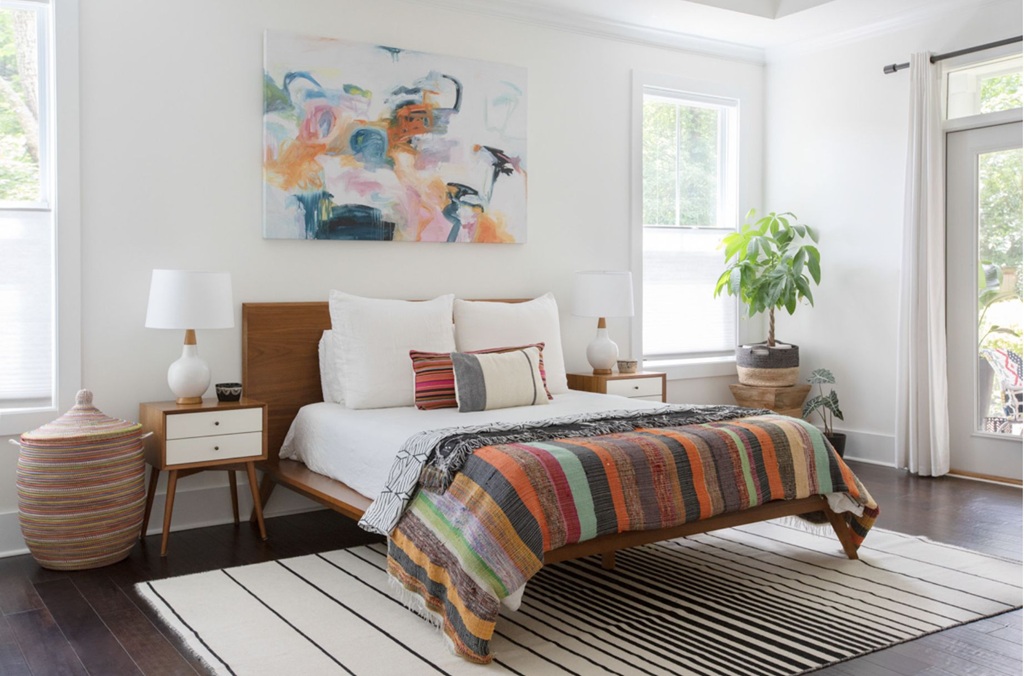
Decor is what transforms a functional space into a personal sanctuary. In a small bedroom, however, every decorative item needs to earn its place. The goal is thoughtful curation, not indiscriminate clutter.
Choose wall art wisely. Art adds personality and color. Instead of scattering many small pictures, consider one larger statement piece scaled appropriately for the wall, or a tightly curated gallery wall with consistent framing. Hanging art slightly higher than usual can help draw the eye up. Mirrors can also double as wall decor.
Focus on textiles. Bedding is often the largest expanse of fabric in the room, so make it count. Invest in quality linens in colors and patterns that complement your overall scheme. Layering pillows and throws adds coziness and texture. Ensure curtains coordinate with the room’s style and color palette.
Bring in nature with plants. Plants add life, color, and a touch of organic texture without taking up much visual space. Opt for hanging plants to keep floor and surface space clear, or place small potted plants on shelves, windowsills, or nightstands. Choose varieties appropriate for the light conditions in your room.
Minimize knick-knacks. While personal touches are important, resist the urge to cover every surface with decorative objects. Select a few meaningful items and display them thoughtfully. Use trays or decorative boxes to group smaller items and keep surfaces looking tidy. Less is often more in a small space.
Create a focal point. Decide what the star of the room will be. It could be a stunning headboard (perhaps a tall, upholstered one, or one with an interesting shape or material), a unique light fixture (like a statement pendant or elegant sconces), a bold piece of artwork, or a beautifully dressed bed. Having a clear focal point draws the eye and gives the room structure, preventing it from feeling like a random collection of furniture.
Don’t forget the “fifth wall” – the ceiling. Painting the ceiling a contrasting color, adding subtle wallpaper, or installing an eye-catching light fixture can draw the eye upward and add an unexpected layer of design interest, distracting from the room’s small footprint.
Illusions of Space: Pro Tricks for Visual Expansion
Beyond the basics of light colors and smart furniture, designers employ several clever tricks to visually expand a small bedroom.
- Floor-to-Ceiling Curtains: As mentioned earlier, hanging curtains from ceiling height down to the floor (or just skimming it) makes ceilings appear much higher. Ensure the curtain panels are wide enough to stack clear of the window when open, maximizing light and the view.
- Strategic Mirror Placement: Go beyond just one mirror. Placing a mirror directly opposite a window doubles the light and view. Placing a mirror behind a lamp can amplify its light. A tall, lean mirror propped against a wall can enhance the sense of height.
- Clear Furniture: Using furniture made of clear materials like acrylic or glass (think a small chair, a C-shaped side table) allows the eye to travel through it, making the pieces seem to disappear and the room feel less crowded.
- Horizontal Lines: While vertical lines add height, horizontal elements can make a room feel wider. Consider installing shiplap or panelling horizontally on an accent wall, or choosing furniture with strong horizontal lines.
- Visual Continuity: Maintaining a consistent flow of color and materials helps a small space feel larger. Use the same flooring throughout if possible (or rugs that blend rather than contrast sharply). Keep the color palette tight and cohesive. Avoid too many jarring transitions.
- Leggy Furniture: Reinforcing this point – furniture that allows you to see the floor underneath creates an undeniable illusion of more space.
Related: Unveiling the Sanctuary: Bedroom Trends Shaping 2025’s Haven
People Also Ask (FAQs)
Q1: How can I make my small bedroom look bigger instantly?
A: The quickest ways are: 1. Declutter: Remove unnecessary items immediately. 2. Maximize Light: Open curtains fully, clean windows. 3. Add Mirrors: Place a large mirror opposite a window or light source. 4. Use Light Colors: Swap dark bedding/throws for lighter ones temporarily. 5. Clear Floor Space: Push furniture against walls, ensure clear pathways.
Q2: What are the absolute best colors for a small bedroom?
A: Light and airy colors are generally best for maximizing perceived space: soft whites, creams, pale grays, light blues, soft greens, and pastels. These reflect light well. However, cohesive tonal palettes (shades of one color) or even strategically used dark, cozy colors (like deep blue or charcoal) can work if balanced with good lighting and lighter accents, creating an intimate feel rather than just aiming for “bigger.”
Q3: What specific furniture pieces are best for a small bedroom?
A: Look for: * Multi-functional: Storage beds (drawers/ottoman), storage benches, headboards with shelves. * Vertical: Tall, narrow dressers and bookshelves. * Floating: Wall-mounted nightstands and shelves. * Leggy: Furniture raised off the floor. * Scaled: Appropriately sized pieces, not oversized. * Convertible: Daybeds, Murphy beds, folding desks if space is extremely limited.
Q4: How should I arrange furniture in a really tiny bedroom?
A: * Place the bed against the longest wall or tucked neatly into a corner. * Prioritize clear pathways – don’t block the door or closet access. * Use vertical space for storage (shelves, tall units). * Opt for floating or wall-mounted pieces where possible (nightstands, sconces). * Keep furniture minimal – only include what’s essential.
Q5: How can I add storage without making my small bedroom feel cluttered?
A: * Utilize hidden storage: under the bed, inside ottomans. * Go vertical: tall shelves, over-the-door organizers, wall units. * Maximize closet space internally (dividers, double rods). * Choose furniture that includes storage (storage beds, headboards). * Use decorative baskets/boxes to contain items on open shelves. * Declutter regularly so you have less to store!
Q6: Is it okay to put a bed in front of a window in a small bedroom?
A: Yes, it can be okay and sometimes necessary for the best layout. * Pros: Can free up valuable solid wall space for dressers or desks, can create a nice focal point. * Cons: May block some light/view, potential for drafts, might make opening/cleaning the window harder. * Tips: Use a headboard that doesn’t fully obstruct the window (e.g., an open metal frame or a low headboard). Ensure you have appropriate window treatments for privacy and light control.
Conclusion: Your Small Bedroom, Your Stylish Haven
Decorating a small bedroom doesn’t require a magic wand, just smart planning and creative thinking. By embracing light, choosing furniture wisely, mastering the layout, implementing clever storage, playing thoughtfully with color and pattern, and adding purposeful decor, you can absolutely overcome the challenges of limited square footage.
Remember the key principles: maximize vertical space, opt for multi-functionality, keep things light and airy (or intentionally cozy!), maintain clear pathways, and ruthlessly edit your belongings. Use visual tricks like mirrors and tall curtains to enhance the sense of space. Most importantly, don’t forget to infuse the room with your own personality. A small bedroom, thoughtfully designed, can be just as stylish, comfortable, and restorative as a larger one. It’s not about the size of the space, but the size of the ideas you bring to it. So go ahead, embrace your cozy corner, apply these strategies, and create the stylish small bedroom sanctuary you deserve.