
Creating a home bar that adapts to your lifestyle requires smart planning. Modular furniture offers the perfect solution for spaces that need to change based on the occasion. Whether you’re hosting a large party or enjoying a quiet evening, flexible bar setups transform with your needs.
Understanding Modular Furniture for Home Bars
Modular furniture consists of individual pieces that work together or independently. These components can be rearranged, stacked, or separated to create different configurations. Additionally, this approach maximizes your space while maintaining functionality.
The beauty of modular design lies in its versatility. You can start with basic elements and expand over time. Therefore, your investment grows with your needs rather than requiring a complete overhaul.
Planning Your Modular Bar Layout
Start by measuring your available space carefully. Consider both the current use and future possibilities. However, don’t forget to account for walking space and guest circulation.
Think about your entertaining style. Do you host large gatherings or intimate cocktail hours? Your answer shapes the furniture pieces you’ll need. Furthermore, consider how often you’ll reconfigure the setup.
Create a wish list of features. Include storage for glassware, bottle displays, and prep areas. Additionally, think about seating options and surface space for mixing drinks.
Essential Modular Components for Your Home Bar
Bar Counter Units
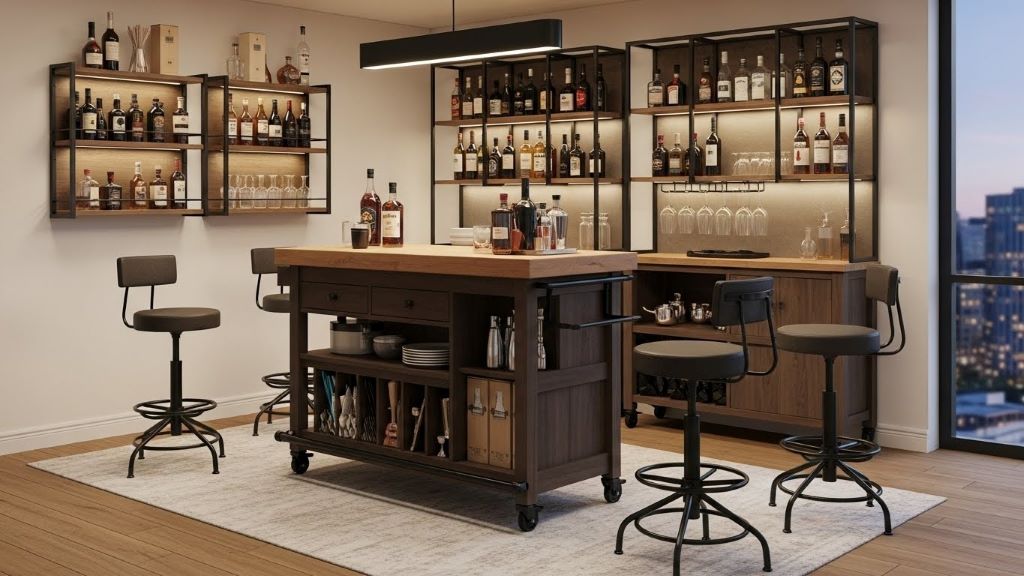
The counter serves as your bar’s foundation. Modular counter units typically come in sections that connect seamlessly. Look for pieces with adjustable heights and widths. Some units feature wheels for easy repositioning.
Choose counters with built-in storage compartments. These keep bottles, tools, and accessories organized. Moreover, opt for surfaces that resist water rings and spills.
Storage Cabinets and Shelving
Stackable cabinets offer tremendous flexibility. You can arrange them vertically for compact spaces or horizontally for room dividers. Select units with adjustable shelves to accommodate different bottle sizes.
Open shelving creates visual interest while displaying your collection. Closed cabinets hide less attractive items. Therefore, combining both types creates balance in your design.
Movable Islands and Carts
Rolling carts serve multiple purposes in a modular bar. They provide extra prep space during parties and store away when not needed. Look for models with locking wheels for stability.
Islands can double as serving stations or additional counter space. Choose designs that complement your main bar units. Additionally, ensure they’re the right height for comfortable use.
Seating Solutions
Modular seating adapts to various group sizes. Backless stools tuck completely under counters. Benches can be moved to create different conversation areas.
Stackable or folding seats store efficiently between events. Consider pieces that serve dual purposes, such as storage ottomans. However, prioritize comfort alongside flexibility.
Material Selection for Durability and Style
Wood remains a classic choice for bar furniture. It offers warmth and can be refinished over time. Nevertheless, ensure you choose water-resistant finishes for surfaces near drink preparation areas.
Metal frames provide strength and modern aesthetics. Stainless steel resists corrosion and cleans easily. Furthermore, powder-coated finishes come in various colors to match your decor.
According to Architectural Digest’s guide on home bar design, combining materials creates visual depth. Mix wood with metal or glass for contemporary appeal.
Laminate and engineered materials offer budget-friendly alternatives. They resist moisture and stains effectively. Additionally, modern laminates convincingly mimic natural materials.
Color Schemes and Finishes
Neutral colors provide maximum flexibility. They work with changing decor trends and seasonal updates. However, don’t shy away from accent pieces in bold hues.
Dark finishes create sophisticated, lounge-like atmospheres. Light tones make small spaces feel larger and airier. Therefore, consider your room’s natural lighting when selecting colors.
Match metal finishes throughout your modular pieces. Consistent hardware creates a cohesive look. Additionally, this attention to detail elevates the overall design.
Maximizing Storage in Small Spaces
Vertical space becomes crucial in compact areas. Tall, narrow cabinets utilize height without consuming floor space. Wall-mounted units keep surfaces clear while providing storage.
Corner units make use of often-wasted areas. Lazy susans and pull-out shelves improve accessibility. Moreover, these features prevent items from getting lost in deep cabinets.
Multi-functional furniture serves double duty. Ottoman storage holds bar accessories, while bar cabinets can include wine refrigerators. Consequently, every piece earns its place in your layout.
Lighting Considerations for Modular Bars
Task lighting ensures safe drink preparation. Under-cabinet LED strips illuminate work surfaces without harsh overhead glare. Additionally, these lights create ambiance when dimmed.
Accent lighting highlights your bottle collection or glassware displays. Consider battery-operated options for flexibility. They eliminate wiring concerns when rearranging furniture.
Pendant lights add personality and define the bar area. Choose adjustable or movable fixtures that adapt to layout changes. However, ensure they provide adequate illumination for functional tasks.
Customization and Personal Touches
Add personality through accessories rather than permanent fixtures. Interchangeable backsplashes or magnetic boards let you update the look seasonally. Furthermore, this approach keeps the design fresh without major investments.
Custom inserts adapt standard modular units to your needs. Stemware racks, knife blocks, or bottle organizers maximize efficiency. Therefore, your bar becomes truly personalized.
Modular systems often allow finish customization. Order matching pieces over time to expand your setup. Additionally, many manufacturers offer mix-and-match collections.
Budget-Friendly Modular Bar Solutions
Start with essential pieces and build gradually. A basic counter and storage unit create a functional foundation. You can add specialty elements as your budget allows.
Repurpose existing furniture creatively. Bookshelves become bottle storage, and side tables transform into mobile carts. However, ensure modifications maintain stability and safety.
IKEA’s modular kitchen systems can be adapted for home bars. Their standardized dimensions make mixing components easy. Moreover, the affordable pricing suits various budgets.
DIY projects reduce costs significantly. Build simple shelving units or customize prefabricated cabinets. Additionally, this hands-on approach creates truly unique pieces.
Maintenance and Care Tips
Regular cleaning prevents buildup and damage. Wipe spills immediately to protect surfaces. Use appropriate cleaners for each material type.
Check connections and hardware periodically. Tighten loose screws and replace worn components. Therefore, your modular furniture remains safe and stable.
Rearrange pieces occasionally to prevent uneven wear. This practice also keeps your design feeling fresh. Additionally, it helps you discover new functional configurations.
Adapting Your Bar for Different Occasions
Configure your bar compactly for everyday use. Expand the setup when hosting parties. This flexibility maximizes your space efficiency.
Create zones for different activities. Separate mixing areas from serving stations. However, ensure smooth workflow between zones.
Seasonal adjustments keep your bar relevant. Add outdoor elements for summer gatherings. Create cozy configurations for winter holidays.
Conclusion
Designing a modular home bar offers endless possibilities for customization and flexibility. By selecting versatile furniture pieces, you create a space that evolves with your entertaining needs. Focus on quality materials, smart storage solutions, and cohesive design elements. Start with essential components and expand gradually as your budget and needs grow. With thoughtful planning, your modular bar becomes a dynamic centerpiece that adapts to any occasion while reflecting your personal style.
Frequently Asked Questions
What is the ideal size for a modular home bar?
The ideal size depends on your available space and entertaining style. A basic setup needs at least 4 feet of counter space and 6 feet of floor space. However, modular designs allow you to start small and expand as needed.
How much does a modular home bar cost?
Modular home bars range from 500 dollars for basic setups to over 5000 dollars for premium systems. Budget-friendly options include repurposed furniture and DIY projects. Additionally, building your collection gradually spreads costs over time.
Can I move modular bar furniture easily?
Yes, most modular bar furniture is designed for easy reconfiguration. Look for pieces with wheels, lightweight materials, or sectional designs. Therefore, you can adapt your layout without heavy lifting or professional help.
What materials work best for home bar surfaces?
Water-resistant materials like sealed wood, quartz, or laminate work best. Stainless steel offers durability for prep areas. Avoid porous materials like untreated wood or marble that stain easily.
How do I maintain my modular bar furniture?
Clean spills immediately using appropriate cleaners for each material. Check hardware connections monthly and tighten as needed. Additionally, use coasters and mats to protect surfaces from moisture and scratches.
Related Topics:
Revitalize Your Home: The Ultimate Guide to Cleaning Furniture, From Everyday Dust to Deep-Set Stains
How to Choose Sustainable Furniture for My First Home