
A climbing rope inspection is a systematic check of your rope’s sheath, core, and overall condition to ensure it remains safe for use. Regular inspection directly affects your safety, performance, and rope lifespan.
Your rope is your primary safety system. When you lead climb, top rope, or rappel, you trust that rope with your life. According to the UIAA (International Climbing and Mountaineering Federation), dynamic ropes must meet strict impact force and fall rating standards. However, those lab-tested ratings assume proper use and maintenance.
Real-world use changes everything.
Dirt, sharp edges, UV exposure, moisture, and repeated falls slowly weaken fibers. A 2022 field analysis by a European climbing equipment lab found that ropes exposed to heavy abrasion and dirt showed measurable sheath wear within a single season of outdoor sport climbing.
This is where a proper rope inspection guide becomes essential. It helps you detect early warning signs before failure occurs. It also helps you understand realistic rope lifespan expectations.
In short: inspect regularly, maintain correctly, and retire responsibly.
How Often Should You Inspect Your Climbing Rope?
You should inspect your rope before every climb and perform a detailed inspection after any major fall or heavy use session.
Here’s a practical schedule:
- Before every climb: Quick visual and tactile check.
- After leader falls: Full hand-over-hand inspection.
- After outdoor trips: Clean and inspect thoroughly.
- Every 3–6 months: Deep condition review.
Manufacturers typically estimate rope lifespan as follows:
| Usage Frequency | Estimated Rope Lifespan |
|---|---|
| Heavy use (weekly, repeated falls) | Up to 1 year |
| Moderate use (twice monthly) | 1–3 years |
| Occasional use (few times per year) | 3–5 years |
| Unused, stored properly | Up to 10 years (max) |
These numbers are general guidelines. Real rope lifespan depends on fall factor, exposure conditions, and storage habits.
What Are the First Signs Your Rope May Be Unsafe?
Flat spots, soft cores, excessive fuzz, sheath slippage, and discoloration are early warning signs.
Use this checklist during inspection:
1. Sheath Damage
- Heavy fuzzing or fraying
- Cut fibers
- Glazed or melted sections (from friction)
2. Core Damage
- Flat or hollow-feeling areas
- Soft spots when squeezed
- Lumpy internal sections
3. Chemical or Water Exposure
- Unusual stiffness
- Discoloration
- Acid or battery exposure (immediate retirement required)
According to accident case reports from alpine clubs, unnoticed core damage has contributed to rope failures in rare but documented incidents. Most failures were linked to sharp edge cuts or severe chemical exposure—not standard wear. Still, prevention starts with inspection.
How Do You Perform a Proper Hand-Over-Hand Rope Inspection?
Run the rope slowly through your hands while visually and physically checking for inconsistencies.
Follow this step-by-step rope inspection guide:
- Uncoil the rope completely.
- Start at one end.
- Slide the rope through your bare hands slowly.
- Feel for diameter changes, stiffness, or flat sections.
- Visually inspect sheath integrity under good lighting.
- Mark damaged areas with tape for evaluation.
Keep tension light but consistent. Your hands will detect issues faster than your eyes.
If you’re unsure about rope construction quality, reviewing manufacturer specifications helps. For example, ropes discussed at
rope inspection guide and rope lifespan comparison resources outline sheath percentage and fall ratings that influence durability.
Higher sheath percentages generally improve abrasion resistance but may increase stiffness.
How Does Dirt and Abrasion Affect Rope Lifespan?
Dirt acts like sandpaper inside your rope, accelerating internal fiber wear.
Outdoor climbing introduces fine particles into the sheath. As the rope flexes during belaying and falls, those particles grind against core fibers.
Lab tests conducted by rope manufacturers show that ropes exposed to dust and repeated flex cycles lose strength faster than clean ropes stored properly.
Key risk factors:
- Rocky crags with sharp limestone edges
- Desert climbing environments
- Dragging rope across the ground
- Top-roping without rope protection
Simple habit: Use a rope tarp. It reduces contamination and extends rope lifespan significantly.
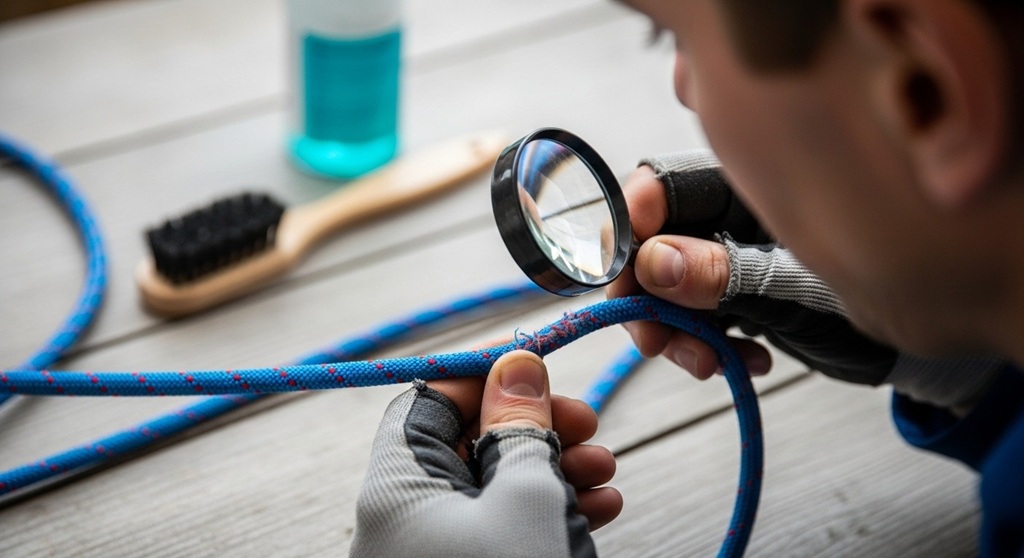
Can You Wash a Climbing Rope Safely?
Yes. Use lukewarm water and mild rope-safe detergent. Avoid harsh chemicals.
Washing removes dirt particles that shorten rope lifespan.
Steps to Wash Your Rope:
- Use cold or lukewarm water (below 30°C).
- Use rope-specific cleaner or mild soap.
- Hand wash or use a front-loading machine (no agitator).
- Air dry in shade.
- Never use a dryer.
UV radiation weakens nylon over time. Always dry away from direct sunlight.
When Should You Retire Your Climbing Rope Immediately?
Retire your rope after severe falls, visible core exposure, chemical contamination, or deep sheath cuts.
Immediate retirement scenarios:
- Fall factor close to 2 in alpine climbing
- Core visible through sheath
- Battery acid contact
- Major edge fall across sharp rock
- Significant sheath slippage
No compromise. Safety comes first.
Even if the rope looks intact, if you cannot confidently assess it, consult the manufacturer or retire it.
How Should You Store Your Climbing Rope to Extend Rope Lifespan?
Store your rope in a cool, dry, dark environment away from chemicals.
Best storage practices:
- Use a rope bag
- Keep away from car trunks in hot weather
- Avoid garages with fuel vapors
- Do not compress tightly under heavy gear
Heat accelerates nylon degradation. Chemical vapors can weaken fibers without visible damage.
Does Rope Type Affect Inspection and Maintenance?
Yes. Single, half, and twin ropes experience different stress patterns.
- Single ropes: Common in sport climbing. Frequent lead falls reduce lifespan faster.
- Half ropes: Used in trad climbing. Abrasion risk increases.
- Twin ropes: Share load but experience more friction in alpine routes.
Dry-treated ropes resist water absorption and dirt better. They may cost more but improve durability in wet environments.
Conclusion: Is Rope Maintenance Worth the Effort?
Your climbing rope is not just gear. It is your primary life-support system.
Inspection takes minutes. Replacement costs money. An accident costs far more.
By following a consistent rope inspection guide, cleaning properly, storing responsibly, and understanding realistic rope lifespan limits, you reduce risk significantly.
Make inspection a routine habit. Before every climb. After every fall.
If you want to compare construction details, sheath percentages, and durability factors, review trusted rope resources and manufacturer data before your next purchase.
Climb smart. Inspect often. Replace when necessary.
Frequently Asked Questions (FAQs)
1. How long does a climbing rope last?
Rope lifespan ranges from 1 year (heavy use) to 10 years (unused, stored correctly). Most active climbers replace ropes every 1–3 years.
2. Can a rope break from one big fall?
Modern UIAA-certified ropes are tested for multiple severe falls. However, a high fall factor combined with edge damage can compromise safety.
3. Is fuzzing normal?
Light fuzzing is normal wear. Deep fraying or core exposure is not.
4. Can I cut a damaged section and keep using the rope?
Yes, if damage is near the end. Mark the new middle clearly. Ensure total length remains suitable for your routes.
5. Does washing reduce rope strength?
No. Proper washing with mild soap can extend rope lifespan by removing abrasive dirt particles.
6. Should gym ropes be inspected too?
Yes. Gym ropes experience repeated falls and lowering cycles. Regular inspection is essential.
Related Topic: How to Get Crispy Results with the Best Home Deep Fryer
Read Next: How to Compare Cordless Vacuums Before Buying