
A toilet clogged with toy is one of the few plumbing problems that feels urgent and awkward at the same time. Your child’s favorite plastic dinosaur went down with a flush; the water is rising, and you need a plan before it overflows. The good news is that most toy blockages sit close to the bowl and respond well to calm, careful handling.
Quick answer: Stop flushing immediately and remove as much water as you safely can. If the toy is visible in the bowl, reach in with a gloved hand or tongs and lift it out; if it has moved past the trap, use a plunger or a toilet auger rather than chemical drain cleaner. Never force a hard plastic object deeper, because that turns a simple fix into a plumber’s visit.
This guide explains what typically happens when a toy goes down, why fast action protects both your plumbing and your floor, and which methods work best. You will also learn the mistakes that cause the most damage and when calling a professional is the smarter move.
What is toilet clogged with toy?
A toy blockage happens when a solid object—a building block, a small figure, a toy car, a ball—wedges inside the toilet’s internal passage and stops water from draining. Unlike paper or waste, these objects do not break down. They sit in place until someone removes them.
Most toilets have a trapway that curves like an S or a U beneath the bowl. The narrowest point is usually about two inches wide, which is why small toys pass the bowl easily and then lodge in the bend. The water rises because it has nowhere to go, not because the pipe is full of soft waste.
Where toys usually get stuck
The location of the toy decides how hard the job will be. Roughly speaking, you will face one of three scenarios:
- Visible in the bowl: The easiest case. The toy sits at the bottom, partly above the water line, and you can grab it.
- Stuck in the trapway: The toy has slipped past the bowl outlet but not into the main drain. A plunger or auger can often reach it.
- Past the toilet and into the drain line: Rarer for larger toys, but possible for small pieces. This may require a drain snake or professional help.
How to tell what you are dealing with
Look before you act. If the water drains slowly rather than not at all, the blockage may be partial. If flushing causes the water to rise close to the rim and stay there, the toy is likely wedged tight. A gurgling sound from nearby drains can suggest the object moved further into the system.
Paper and waste soften and break apart. Hard plastic, wood, and metal do not. That is why a toy clog rarely clears on its own, no matter how many times you flush.
The key takeaway: identify whether the toy is visible and roughly where it sits, because that single observation determines which tool you reach for first.
Why toilet clogged with toy matters
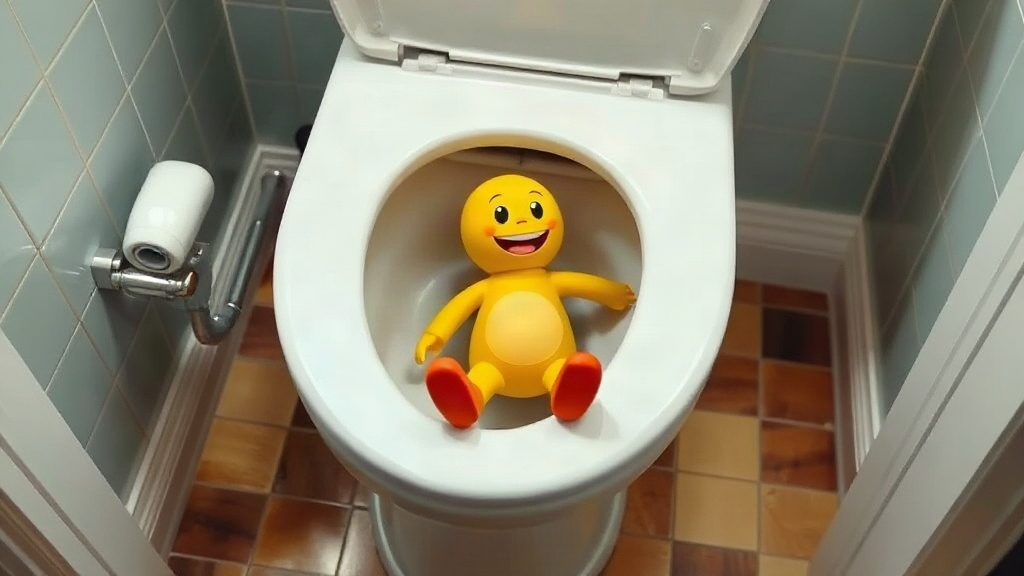
A toy clog is not just inconvenient. Left alone or handled roughly, it can cause damage that costs far more than a plumber’s call-out. Water that cannot drain has to go somewhere, and that somewhere is often your bathroom floor.
Water damage adds up fast
Each flush pushes more water into a bowl that cannot empty it. A single overflow can soak bath mats, seep under tile, and reach the ceiling of the room below. Damp subflooring and drywall are slow to dry and quick to develop mold. The cleanup can take days, and repair bills climb with every minute water sits.
Forcing the issue causes real plumbing damage
A hard toy pressed against the trapway can crack the porcelain or loosen the wax ring that seals the toilet to the floor. Replacing a wax ring is a modest job; replacing a cracked bowl is not. Aggressive plunging can also push the toy deeper into the drain line, where it becomes much harder to retrieve.
Chemical cleaners cannot dissolve plastic or metal. They only sit against the blockage, and they can splash back when you later plunge. Keep them away from toy clogs entirely.
Timing affects the outcome
The sooner you deal with the toy, the easier it usually is. An object caught early often sits within reach of a plunger or auger. One that has been flushed repeatedly can travel further and wedge tighter. Fast action also limits how much water enters the bowl.
There is a safety angle too. Young children are naturally curious about toilets, and a clogged one invites more flushing and more attempts to “help.” Clearing the blockage quickly removes that temptation and restores normal bathroom routines.
The takeaway here is simple: treat a toy clog as a small emergency, not an annoyance to ignore until morning.
Best practices
The right method depends on what you can see and how the toilet is behaving. Work through these approaches in order, and stop as soon as the water starts draining normally.
Step-by-step: what to do first
- Stop flushing. Every flush adds water and pressure you do not need.
- Turn off the water supply at the valve behind the toilet if the bowl is close to overflowing.
- Remove excess water with a cup or a small bucket to lower the level and give yourself room to work.
- Look for the toy. If it is visible, put on gloves and use tongs or your hand to lift it out.
- Protect the floor with old towels around the base before you begin plunging.
Using a plunger correctly
A flange plunger—the kind with a fold-out rubber cup designed for toilets—works far better than a flat cup plunger. Seat the cup firmly over the drain opening so it seals. Push down gently and pull up with steady force several times, keeping the seal intact. The goal is suction and pressure changes, not brute force.
If the water clears and drains freely, the toy has likely moved. Flush once and watch the water carefully. If it rises again, stop and move to the next method.
When to use a toilet auger
A toilet auger is a flexible cable with a crank handle and a protective sleeve. It reaches into the trapway to hook or push the object. Feed the cable slowly through the drain, crank gently, and pull back when you feel resistance. This tool is the safest way to reach a toy that has moved past the bowl.
Place a bucket under the auger’s sleeve as you withdraw it. It catches drips and saves you a second cleanup.
When to call a professional
Call a plumber if the toy will not budge after two or three careful attempts, if the toilet shows cracks, or if water backs up into other drains. A professional has cameras and specialized tools to locate and retrieve objects without damaging the fixture. The cost of a service call is almost always lower than replacing a cracked toilet.
The core takeaway: go slow, use the right tool for the toy’s location, and know when to hand the job to someone with better equipment.
Common mistakes to avoid
Most toy clogs get worse because of what people do after the first flush fails. Avoiding these errors keeps a manageable problem from turning into an expensive one.
Flushing again and again
This is the most frequent and most costly mistake. Each flush pushes the toy further along the trapway and adds water to a bowl that cannot drain it. If one flush did not clear the blockage, a second will not either. Stop and assess the situation.
Reaching too aggressively
Using a wire coat hanger or a sharp tool can scratch the porcelain and tear at the toy, leaving fragments behind. Rough digging can also push the object deeper. Use gloved hands, tongs, or a proper auger instead. Gentle, controlled movements protect both the fixture and your hands.
Pouring in chemical drain cleaner
Drain cleaner is formulated for soft clogs like hair and soap scum. It has no effect on solid plastic or metal. Worse, a caustic chemical sitting in the bowl is a hazard if it splashes during later plunging. Keep chemicals out of the equation.
Ignoring a partial clog
A toilet that drains slowly after the toy seems to have moved is still a problem. The object may be lodged at an angle, catching paper and waste over time. Treat any change in flush performance as a sign the toy is still in the system.
Forgetting the child’s perspective
Children often try to retrieve their toy themselves or flush repeatedly to “fix” it. Keep the bathroom door closed and supervise young children during the process. Explain briefly what happened so they do not repeat it.
If sinks or the tub drain slowly after the toilet clears, the toy may have moved into the main line. That situation calls for a plumber.
The takeaway: the biggest risks come from repetition and force. Pause, think about where the toy is, and choose a method that lifts it out rather than driving it down.
FAQ
How much does it cost to fix a toilet clogged with toy?
If you clear it yourself, the cost is usually zero beyond basic tools like a plunger or auger. A plumber’s visit typically runs from around one hundred to several hundred dollars, depending on your area and whether the toy has moved into the drain line. Damage repairs, such as a new wax ring or bowl, add to that.
Can I just wait for the toy to dissolve?
No. Plastic, wood, and metal toys do not break down in water. Waiting will not clear the clog and may allow water to back up. The toy has to be removed physically.
Is a toy clog dangerous for my plumbing?
The clog itself is not dangerous, but the handling can be. Repeated flushing can cause overflow and water damage, and forceful plunging can crack porcelain or push the toy deeper. Careful removal protects your plumbing.
When should I stop trying and call a plumber?
Call a professional if the toy is out of reach after a few careful attempts, if the toilet is cracked, or if other drains back up. Those signs suggest the object has moved beyond the bowl, where specialized tools are needed.
Can a small toy pass through on its own?
Small, smooth objects occasionally make it through the trapway, but it is never safe to assume so. Flush once and watch. If the water rises or drains slowly, the toy is still there.
Conclusion
A toilet clogged with toy is a manageable problem when you act quickly and avoid force. Identify where the toy sits, remove water from the bowl, and use a plunger or auger designed for the job. Keep chemicals and improvised tools out of the process. Repeated flushing and aggressive probing are what turn a small inconvenience into cracked porcelain or a soaked floor.
Your next step: check the bowl right now, grab gloves and a flange plunger, and try one careful attempt. If the toy will not move after a few tries, call a plumber before the situation gets worse. A calm, measured response protects your bathroom, your budget, and your peace of mind.