
Key Takeaways
- Corded vacuums deliver steady, unlimited suction power for deep cleaning.
- Cordless models win on speed, ease, and quick daily cleanups.
- Battery voltage and capacity affect suction, runtime, and weight.
- Lithium-ion batteries hold power longer than older battery types.
- Your home size, floor type, and cleaning habits should guide your choice.
Choosing between a corded and a cordless vacuum is not simple anymore. Both types have improved a lot in recent years. Therefore, many shoppers feel confused when they read product pages full of numbers and claims. Battery technology is the main reason for this shift. Modern lithium-ion batteries have made cordless vacuums lighter and stronger than ever. According to industry analysis from the Best Vacuum Cleaner blog and testing from Consumer Reports, cordless stick vacuums now match some corded models on bare floors and light carpet jobs. However, battery power still has limits that matter.
This guide breaks down how battery power shapes real cleaning performance. You will learn about suction, runtime, battery life, cost, and cleaning results. By the end, you will know which type fits your home and habits. Additionally, you will know how to spot marketing hype and read specs with confidence.
How Suction Power Works in Each Type
Suction is the pulling force that lifts dirt from your floor or carpet. Corded vacuums draw electricity straight from your wall socket. As a result, they produce steady suction from the first second to the last. Most full-size corded models generate strong, consistent airflow because wall power rarely changes.
Cordless vacuums work differently. They rely on a battery pack, usually rated between 18 and 40 volts. Higher voltage often means stronger suction, but not always. The design of the motor, the airflow path, and the brush head matter just as much. For example, two 25-volt models can clean very differently.
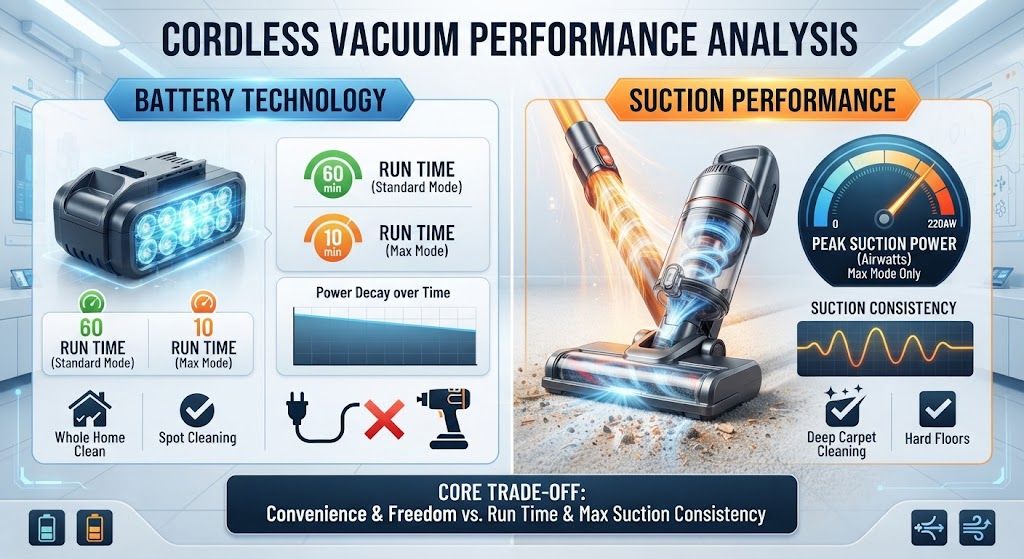
Battery drain also affects suction. Many cordless vacuums start at full power and slowly fade as the battery empties. Some models switch to a lower power mode to stretch runtime. Therefore, you may notice weaker pickup near the end of a cleaning session.
In contrast, a corded vacuum keeps the same suction for hours. This matters most for thick carpets, pet hair, and deep-ground dust. If your home has heavy carpets, that steady power gives corded models a clear edge.
Runtime and Charging: The Real Trade-Off
Runtime is where corded vacuums dominate. A corded model runs as long as you need it. There is no waiting, no charging dock, and no planning ahead. For large homes, this removes a major headache.
Cordless vacuums usually run between 15 and 60 minutes per charge. However, that number drops fast in maximum power mode. Some powerful modes last only 8 to 12 minutes. In addition, battery age shortens runtime over the years.
Charging is another factor. Most cordless models need 3 to 5 hours for a full charge. Some premium brands charge faster or offer swappable batteries. Swappable packs help, but they add extra cost.
Consider these quick facts:
- Standard mode: 25 to 60 minutes on most models.
- Boost mode: often under 15 minutes.
- Full recharge: usually 3 to 5 hours.
- Battery lifespan: about 3 to 5 years with normal use.
Therefore, your cleaning style should drive the decision. Quick daily cleanups suit a cordless vacuum fine. Meanwhile, one long weekly deep clean favors a corded machine. Many households actually keep both for this reason. The cordless handles crumbs and stairs, while the corded handles deep carpet cleaning.
Battery Life, Weight, and Long-Term Costs
Battery health is a hidden cost in cordless vacuums. Lithium-ion cells slowly lose capacity over time. After a few years, a vacuum that once ran 40 minutes may run only 25. Replacing the pack costs anywhere from 50 to 150 dollars, depending on the brand.
Some brands now sell replaceable batteries, which extends the vacuum’s life. Others seal the battery inside, so the whole machine retires when the pack dies. Therefore, check this detail before you buy.
Weight tells a similar story. Cordless vacuums are lighter, often between 2.5 and 8 pounds. Corded models are heavier, often between 12 and 20 pounds. However, heavier machines usually clean carpets better because their weight presses the brush into the fibers.
Cost over time also matters:
- Cordless vacuums cost more upfront for similar suction.
- Battery replacement adds expense after a few years.
- Corded vacuums cost less but use more electricity per hour.
- Electricity costs remain small either way, often a few dollars per year.
According to ENERGY STAR, vacuum cleaners account for a small share of home energy use, so running costs rarely decide the purchase. Instead, battery replacement is the higher long-term cost for cordless buyers.
Cleaning Performance on Different Floor Types
Floor type changes everything. On hard floors, cordless vacuums perform very well. Their light heads glide easily, and suction needs are modest. Many cordless models earn top scores on hard floor pickup tests.
On carpets, the story shifts. Thick carpets need strong, steady airflow to pull embedded dirt. Corded vacuums hold an advantage here. Their motors run longer at full power without overheating or draining a battery.
Pet hair adds another challenge. Corded vacuums with motorized brush heads handle large shedding areas with ease. Cordless models manage pet hair too, but often need boost mode. That mode drains the battery quickly.
Consider these matches:
- Hard floors: cordless wins for speed and ease.
- Low-pile carpet: both types perform well.
- Thick carpet: corded wins on deep pickup.
- Stairs and cars: cordless wins for portability.
- Large homes: corded wins for nonstop coverage.
Additionally, filtration matters for allergy sufferers. Many corded models use larger, layered bags that capture fine dust. Cordless models rely on smaller filters that need more frequent washing. Both can filter well when maintained properly.
Which One Should You Choose?
Your lifestyle answers this question better than any spec sheet. Choose cordless if you live in a small or mid-size home with mostly hard floors. It also suits busy people who clean in short bursts. Grabbing a vacuum off the dock beats unwinding a cord every time.
Choose corded if your home is large, carpet-heavy, or full of pets. Deep cleaning sessions need steady suction and unlimited runtime. Corded machines also cost less for the same cleaning power.
Budget shapes the decision too. Good cordless vacuums with strong suction often cost 300 dollars or more. Meanwhile, solid corded models start well under 200 dollars. Therefore, value seekers usually lean corded.
Finally, think about maintenance. Cordless vacuums need filter washes and eventual battery replacement. Corded vacuums need bags or bin emptying and belt checks. Neither is hard, but habits differ. Pick the routine you will actually follow.
Frequently Asked Questions
Do cordless vacuums have less suction than corded vacuums?
Usually, yes. Corded models draw steady wall power, so they sustain stronger suction longer. However, premium cordless vacuums now handle hard floors and light carpets very well.
How long do cordless vacuum batteries last?
Most lithium-ion batteries last 3 to 5 years with normal use. Runtime per charge typically falls between 15 and 60 minutes, depending on the power mode.
Are cordless vacuums good for carpets?
They work well on low-pile carpets. However, thick carpets trap deep dirt and need steady power, so corded vacuums clean them more effectively.
Which type is better for pet hair?
Corded vacuums handle heavy pet shedding better because they run at full power without fading. That said, cordless models with motorized brush heads handle daily pet hair fine.
Do cordless vacuums cost more over time?
Often, yes. They cost more upfront, and battery replacement adds expense after a few years. Corded vacuums cost less initially and have fewer replaceable parts.
Conclusion
Battery power has genuinely changed the vacuum market. Cordless vacuums offer freedom, speed, and strong performance on hard floors. For smaller homes, choosing the right model can make cleaning easier, especially if you need to select the best cordless vacuum for rugs in small spaces. Meanwhile, corded vacuums still own the deep-cleaning crown with steady, unlimited suction. The right choice depends on your home, not on marketing claims. Small spaces and hard floors favor cordless models. Large homes, thick carpets, and heavy shedding favor corded machines. Additionally, your budget and cleaning habits should tip the scale one way or the other.
Therefore, list your needs before you shop. Check the battery voltage, runtime in boost mode, and whether the battery is replaceable. If you go corded, check the hose length and filtration type instead.
Ready to pick your next vacuum? Measure your home’s floor types, set a budget, and compare two models in each style. Then buy the one that matches how you actually clean, not how you wish you did. A vacuum you enjoy using always cleans better than one that stays in the closet.