
Dust mites are tiny. You cannot see them with the naked eye. Yet millions of them live in your home right now. They hide in mattresses, carpets, pillows, and upholstered furniture. For many people, these microscopic creatures trigger sneezing, itchy eyes, skin rashes, and even serious asthma attacks.
The good news is that you can fight back. With the right vacuum cleaner and a consistent cleaning routine, you can dramatically reduce dust mite populations in your home. This guide covers everything you need to know — from understanding where dust mites live to choosing the right vacuum and using it effectively.
What Are Dust Mites and Why Should You Care
Dust mites are microscopic arachnids, closely related to spiders and ticks. They are roughly 0.2 to 0.3 millimeters in size. A single mattress can house up to ten million of them. They thrive in warm, humid environments and feed primarily on dead human skin cells.
The mites themselves are not the biggest problem. Their waste particles and shed body parts are what cause allergic reactions. When these tiny fragments become airborne, they enter your lungs and trigger symptoms. Therefore, the goal is not just to kill dust mites but to physically remove them and their debris from your living space.
This is where a vacuum cleaner becomes your most powerful tool.
Where Dust Mites Hide in Your Home
Before you start vacuuming, it helps to know exactly where dust mites concentrate. They tend to gather in the places where humans spend the most time and shed the most skin.
The most common hotspots include:
- Mattresses and bed bases
- Pillows and duvets
- Upholstered sofas and armchairs
- Carpets and rugs
- Curtains and fabric blinds
- Stuffed toys and cushions
Your bed is the single biggest concern. You spend roughly one-third of your life there. Additionally, the warmth and moisture from your body create the perfect conditions for dust mites to multiply. This is why deep cleaning mattress surfaces is one of the most important steps in any anti-allergen routine.
Why Regular Vacuums Are Not Enough
Not all vacuum cleaners are created equal. A standard vacuum may actually make things worse. Here is why.
Many basic models use simple paper or foam filters. These filters trap larger debris but allow tiny particles to pass straight through. As a result, dust mite waste and allergens get blown back into the room through the exhaust. You might vacuum for twenty minutes and end up with more airborne allergens than when you started.
Additionally, some vacuums lack the suction power to pull dust mites from deep within mattress fibres or carpet pile. Surface-level cleaning leaves the bulk of the problem untouched. Therefore, investing in the right type of vacuum is not optional — it is essential.
What to Look for in a Dust Mite Vacuum Cleaner
Choosing the right vacuum cleaner for dust mites comes down to a few key features. Each one plays a specific role in making your cleaning more effective.
HEPA Filtration
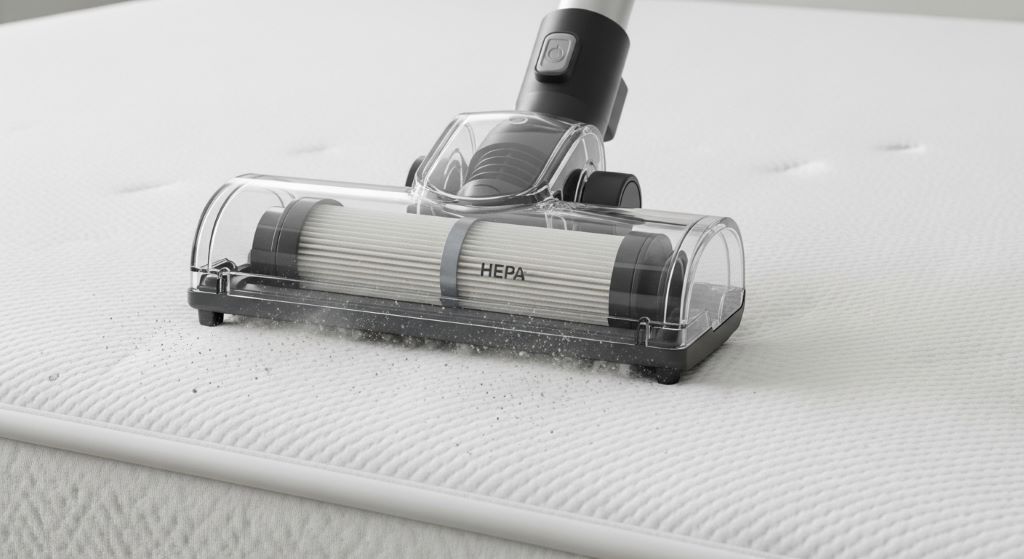
HEPA stands for High-Efficiency Particulate Air. A true HEPA filter captures 99.97 percent of particles as small as 0.3 microns. Dust mite allergens fall within this range. Without a HEPA filter, your vacuum is simply recycling allergens back into the air.
Always look for “true HEPA” on the label. Some products are marketed as “HEPA-like” or “HEPA-style,” but these do not meet the same standard. The difference matters significantly for anyone with allergies or asthma.
Strong and Consistent Suction
Suction power is measured in different ways, but the practical test is simple. A good vacuum should be able to pull debris from deep within carpet fibres and mattress foam without losing power as the dustbin fills. Look for models with consistent suction rather than those that weaken as they fill up.
Bagged models often maintain suction better than bagless ones. This is because a sealed bag prevents clogging and keeps the airflow consistent throughout the cleaning session.
Sealed System Design
Even the best HEPA filter is useless if your vacuum has air leaks. A sealed system ensures that all air pulled into the machine passes through the filter before being released. Without this, allergens can escape through gaps in the body of the vacuum.
When shopping, look for vacuums that are certified as fully sealed. Some brands submit their products for independent allergen testing, which provides an extra layer of assurance.
UV-C Light Technology
Some vacuum cleaners designed for allergy sufferers include UV-C light. This feature kills dust mites on contact by disrupting their DNA. It is especially useful for mattresses and pillows where you cannot use high heat or chemical sprays.
UV-C vacuums are particularly effective when used as part of deep cleaning mattress sessions. The combination of suction and UV light addresses both living mites and the debris they leave behind.
Dedicated Upholstery and Mattress Attachments
A good set of attachments is just as important as the vacuum itself. Look for a model that includes a narrow crevice tool for seams and edges, a wide upholstery nozzle for flat surfaces, and a motorized brush head for carpets.
The mattress tool, in particular, should be designed to work at a slow, deliberate pace. Unlike hard floors, mattresses require more passes and more pressure to draw out deeply embedded mites and allergens.
How to Vacuum for Maximum Dust Mite Removal
Having the right vacuum is only half the battle. How you use it matters just as much.
Start With Your Bedding
Strip all bedding from the bed before vacuuming. Wash sheets, pillowcases, and duvet covers in water that is at least 60 degrees Celsius. This temperature kills dust mites effectively. Cold water washes leave many of them alive.
While the bedding is being washed, move on to the mattress.
Vacuum Your Mattress Thoroughly
This is the most important step. Use the upholstery or mattress attachment. Work slowly across the entire surface, overlapping each stroke. Pay extra attention to the seams, edges, and any indentations in the mattress.
Flip the mattress if possible and repeat the process on the other side. For foam mattresses that cannot be flipped, focus additional time on the top surface. This process of deep cleaning mattress fabric removes not only mites but also their eggs and waste particles.
Allow extra time here. A thorough mattress vacuum should take at least ten to fifteen minutes per side.
Move to Pillows and Cushions
Pillows accumulate mites almost as fast as mattresses. Use the upholstery nozzle and vacuum all sides of each pillow. If your pillow is washable, launder it regularly as well.
Apply the same method to sofa cushions, armrests, and any fabric surfaces where you regularly sit or rest.
Tackle Carpets and Rugs
For carpets, use the motorized brush head. Vacuum in slow, overlapping passes. Go over high-traffic areas twice. Dust mites in carpets are deeply embedded, so speed is the enemy here.
If possible, remove rugs and take them outside to beat them before vacuuming. This loosens embedded debris and makes your vacuum more effective.
Do Not Forget Curtains and Skirting Boards
Curtains are often overlooked, but they collect dust and allergens quickly. Use the crevice or upholstery tool to vacuum folds and hems. Also vacuum along skirting boards, under furniture, and in corners where dust accumulates.
How Often Should You Vacuum for Dust Mite Control
Frequency matters. A single deep clean will reduce mite numbers, but they will return without ongoing maintenance.
For bedrooms, vacuum the mattress at least once every two weeks. Carpets in high-use rooms should be vacuumed two to three times per week. Sofas and upholstered furniture benefit from a weekly session.
Additionally, reducing humidity in your home supports your vacuuming efforts. Dust mites need humidity levels above 50 percent to survive and reproduce. Keeping your home between 40 and 50 percent humidity through ventilation or a dehumidifier slows their growth significantly.
Complementary Steps for an Allergy-Free Home
Vacuuming is the foundation, but other habits help you maintain an allergy-free home more effectively.
Using allergen-proof mattress and pillow covers is one of the most impactful steps. These covers create a barrier that prevents mites from colonizing your mattress in the first place. Look for covers that are breathable but tightly woven.
Washing bedding weekly at high temperatures continues the work your vacuum starts. Steam cleaning, when done periodically, adds another layer of protection for carpets and upholstery. Steam at the right temperature kills mites on contact without the need for chemicals.
Reducing clutter also helps. Fewer soft furnishings, stuffed animals, and fabric decorations mean fewer hiding places for dust mites. Minimalism and cleanliness go hand in hand when managing allergens.
Finally, keep pets out of bedrooms if possible. Pet dander adds another allergen source that compounds the problem.
Choosing Between Upright, Canister, and Handheld Models
Each vacuum type has its strengths. Understanding the differences helps you choose what suits your home best.
Upright vacuums are powerful and easy to use on carpets. Many come with strong motorized brush heads that lift embedded debris effectively. However, they can be awkward to use on stairs and upholstery.
Canister vacuums offer more flexibility. The separate canister and hose make it easier to vacuum mattresses, curtains, and difficult corners. They are often quieter than upright models and work well on both hard floors and carpets.
Handheld vacuums are not ideal as your primary anti-dust-mite tool, but they work well for quick maintenance between deeper sessions. A small cordless model is convenient for daily spot-cleaning of sofas and cushions.
Some brands also offer robot vacuums with HEPA filtration. These can maintain your floors between manual sessions, though they are not a substitute for the thorough cleaning a full-size vacuum provides.
Top Mistakes to Avoid When Vacuuming for Dust Mites
Even with the right equipment, a few common mistakes can undermine your efforts.
Vacuuming too fast is the most frequent error. Rushing over a surface barely scratches the problem. Slow, deliberate strokes give the suction time to work.
Forgetting to empty or replace the dustbin is another common issue. A full bin reduces suction significantly. Empty bagless models after every session. Replace bags in bagged models before they reach full capacity.
Neglecting the vacuum itself leads to problems over time. HEPA filters need replacing according to the manufacturer’s schedule. A clogged filter reduces both suction and filtration performance.
Finally, using the wrong attachment for each surface limits your results. Take the time to switch tools as needed. A mattress nozzle on a hard floor and a carpet brush on a mattress both perform poorly.
Conclusion
Dust mites are a persistent problem, but they are a manageable one. The key is combining the right equipment with the right habits. A vacuum cleaner with a true HEPA filter, a sealed system, and strong consistent suction is your most important investment.
Start with your mattress. Use the correct attachments and work slowly. Complement your vacuuming routine with hot washing, allergen-proof covers, and humidity control. Over time, these steps will help you build and maintain an allergy-free home that supports better health and more restful sleep.
The effort is worth it. A cleaner sleeping environment means fewer symptoms, better rest, and a healthier life for everyone in your household. Choose the right tools, use them consistently, and dust mites will no longer have the upper hand.
Frequently Asked Questions
How often should I vacuum my mattress to control dust mites?
Vacuum your mattress at least once every two weeks. If you suffer from allergies or asthma, consider vacuuming it weekly. Pair this with hot washing of bedding to keep mite levels low.
Do I need a special vacuum cleaner for dust mites, or will any model work?
A standard vacuum is often not effective enough. You need a model with a true HEPA filter, sealed system design, and strong suction. Some models also include UV-C light, which is especially helpful for mattress cleaning.
Can vacuuming completely eliminate dust mites from my home?
Vacuuming alone cannot completely eliminate dust mites, but it significantly reduces their numbers. For best results, combine vacuuming with allergen-proof covers, hot washing of bedding, and humidity control below 50 percent.
What is the best vacuum attachment for cleaning mattresses?
A wide upholstery or dedicated mattress nozzle works best. It covers more surface area per stroke and creates a better seal against the mattress fabric, improving suction and allergen removal.
Is steam cleaning better than vacuuming for dust mites?
Both methods work well, but they serve different purposes. Vacuuming physically removes mites and debris. Steam cleaning kills mites using heat. Using both in combination provides the most thorough results.
Related Topics:
Small Bedroom, Big Style: How to Decorate a Small Bedroom with Flair
How to Buy King Bedroom Sets on Clearance and Save Big