
Your bedroom should feel like a retreat. However, not every bedroom comes with a proper headboard. Whether you are renting an apartment, working with a tight budget, or simply looking for a fresh look, you do not need a traditional headboard to create a beautiful, cozy sleeping space. Pillows can do the job — and do it beautifully. This guide shows you exactly how to design a stylish headboard alternative using pillows, step by step.
Why Skip the Traditional Headboard
Traditional headboards are expensive. They are also heavy, difficult to move, and often impossible to customize without spending more money. For renters, drilling holes into walls is usually off the table entirely.
The good news is that a pillow-based headboard alternative gives you the same visual impact at a fraction of the cost. Additionally, it is easy to change whenever you want a new look. You can swap colors, textures, and arrangements with almost no effort. That kind of flexibility is something a fixed wooden or upholstered headboard simply cannot offer.
Choosing the Right Pillows for the Job
Not all pillows work equally well as a headboard alternative. The goal is to create a layered, structured look that fills the wall space above your bed. Therefore, you need to think carefully about size, shape, and texture before you start.
Start with large Euro pillows. These square pillows measure about 26 by 26 inches. They are the backbone of any pillow headboard arrangement. Place them flat against the wall in a row. They create height and structure immediately.
Next, add standard sleeping pillows in front of the Euro pillows. Then layer in accent pillows of different sizes in front of those. The layering effect creates depth. It also makes the whole arrangement look intentional and polished rather than thrown together.
Here is a simple guide to the pillow sizes that work best:
- Euro pillows (26×26 inches) — for the back row against the wall
- Standard pillows (20×26 inches) — for the middle layer
- Lumbar pillows (12×20 inches) — for the front, decorative layer
- Round or bolster pillows — for added visual interest
Picking Colors and Textures That Work Together
Color is where most people feel uncertain. However, choosing a palette is simpler than it seems. Start with a neutral base and build from there.
Choose your Euro pillow covers in a neutral tone — white, cream, linen, or soft grey. These will form the backdrop of your arrangement. Then introduce one or two accent colors in your smaller pillows. The accent colors should echo something already in the room, such as the curtains, a rug, or artwork on the wall.
Texture is just as important as color. Mix smooth cotton covers with chunky knit pillow covers, velvet, or woven fabric. The contrast between textures adds richness to the overall look. Additionally, a mix of textures makes the arrangement look curated rather than flat.
Avoid using more than three colors in the arrangement. Too many colors create visual noise. A clean, limited palette always looks more intentional and sophisticated.
Setting Up Wall Cushions for a Structured Look
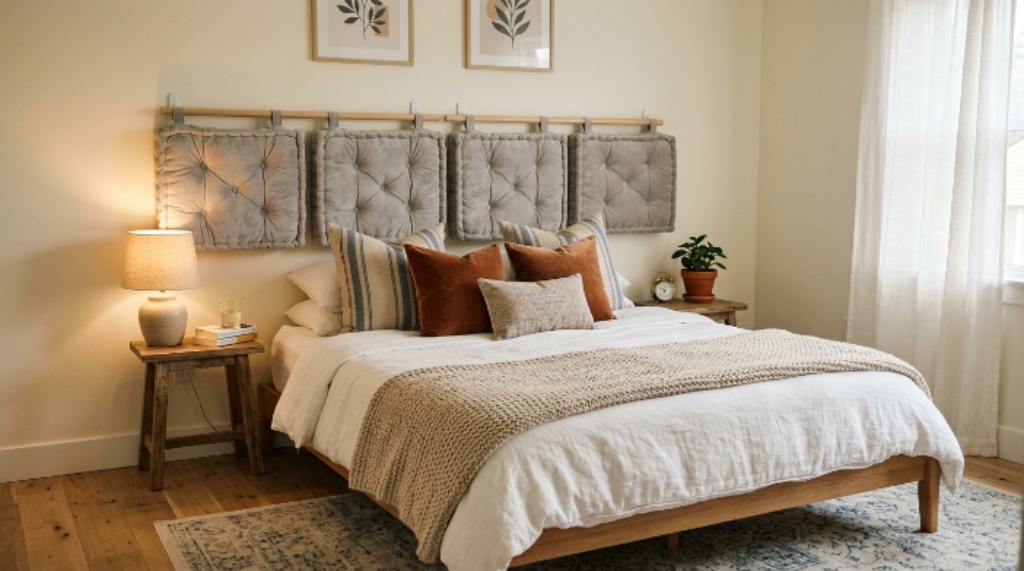
Wall cushions take the pillow headboard concept one step further. Instead of simply leaning pillows against the wall, you mount cushioned panels or large floor cushions directly onto the wall. This creates a more structured, permanent-looking result.
Wall cushions are available in flat panel styles or in button-tufted designs that mimic traditional upholstered headboards. Many are designed to hang using picture-hanging strips or hook-and-loop tape, which means no nails, no damage, and no landlord complaints. This makes them an excellent choice for renter-friendly decor, since they go up easily and come down without leaving a mark.
To set up wall cushions effectively, measure the width of your bed first. A queen bed is about 60 inches wide. A king bed is about 76 inches wide. Aim to cover at least the full width of the mattress, and ideally a few inches beyond each side for a more generous, designer-inspired look.
Leaning Pillows Against the Wall Without a Frame
If you prefer not to mount anything at all, you can still create a stunning headboard effect by simply leaning pillows against the wall. The trick is keeping them in place throughout the night.
One of the best methods is to use a narrow shelf or a slim ledge attached to the wall at mattress height. This gives the Euro pillows something to rest against and prevents them from slipping down during the night. Alternatively, you can tuck the back row of pillows between the mattress and the wall. This wedge effect holds them securely in place without any additional hardware.
Another option is to use a tension rod system or a curtain rod mounted low on the wall. Pillow covers with ties or loops can hang from the rod, holding them upright all night. This approach works well in smaller rooms where space is tight.
Creating a Bohemian Pillow Wall
For a more relaxed, creative look, consider a full pillow wall. This involves covering a larger section of the wall above the bed with an eclectic mix of pillows, cushions, and even fabric wall hangings.
Start by hanging a large piece of fabric or a woven tapestry as the base layer. Then layer floor pillows and large cushions in front of it, either mounted or propped against the wall. Mix patterns freely — geometric prints, botanical designs, and solid colors all work together in a bohemian palette.
This style works especially well in studio apartments and smaller rooms. It adds warmth and personality without taking up any floor space. Therefore, it is one of the most practical solutions for city dwellers and renters who want a stylish bedroom on a budget.
How to Style the Pillow Headboard for Different Bedroom Aesthetics
The pillow headboard works across many different design styles. Here is how to adapt it to suit your taste.
For a minimalist bedroom, use three large white or grey Euro pillows in matching covers. Keep the arrangement symmetrical. Avoid decorative accent pillows. The result is clean, calm, and modern.
For a Scandinavian look, choose neutral linen covers with simple geometric patterns. Add a single lumbar pillow in a muted tone. Keep everything low to the mattress for a sleek, grounded feel.
For a maximalist or eclectic bedroom, mix as many textures and patterns as you like. Layer generously. Include throw pillows in bold colors, fringe details, and embroidered designs. The more layered the arrangement, the more luxurious the bed looks.
For a romantic or hotel-inspired bedroom, use white or ivory pillow covers in crisp cotton or sateen. Arrange them in a symmetrical stack with sharp, clean edges. This style pairs beautifully with soft lighting and neutral bedding.
Maintaining Your Pillow Headboard
One advantage of a pillow-based headboard is how easy it is to maintain. Unlike a fabric-upholstered headboard that collects dust and is difficult to clean, pillow covers can be removed and washed regularly.
Wash pillow covers every two to four weeks. This keeps the arrangement looking fresh and hygienic. Additionally, fluff the pillow inserts regularly to maintain their shape. Flat, deflated pillows ruin the layered effect you have worked hard to create.
Store extra pillow covers in a drawer or a storage basket near the bed. This way, you can swap them out seasonally or whenever the mood strikes. Switching from warm, cozy textures in winter to crisp, light fabrics in summer keeps your bedroom feeling seasonal and fresh all year long.
Conclusion
Creating a stylish headboard alternative using pillows is one of the smartest and most versatile bedroom upgrades you can make. It requires no major investment, no permanent fixtures, and no professional help. By choosing the right pillow sizes, mixing colors and textures thoughtfully, and considering options like wall cushions and renter-friendly decor solutions, you can build a bedroom that looks designed and intentional. The best part is that the look can evolve as your taste changes. All it takes is a new set of pillow covers and a few minutes of rearranging.
Frequently Asked Questions
How do I keep pillows from falling during the night?
Tuck the back row of Euro pillows firmly between the mattress and the wall. Alternatively, use a slim shelf or ledge mounted at mattress height to give the pillows something solid to lean against.
Can I use this method in a rental apartment without damaging the walls?
Yes. Most pillow headboard setups require no wall damage at all. For wall cushions, use removable adhesive strips or hook-and-loop tape designed for renters. Always follow the weight limits on the packaging.
How many pillows do I need for a queen-sized bed?
A good starting point is two to three Euro pillows for the back row, two standard pillows in the middle, and two to four accent pillows in the front. Adjust the number based on how full and layered you want the arrangement to look.
What is the best fabric for pillow covers used as a headboard?
Linen and cotton are the most popular choices. They look clean, are easy to wash, and come in a wide range of colors. For a more luxurious look, velvet or sateen covers add richness and visual weight to the arrangement.
How do I make the pillow headboard look neat every morning?
Spend two to three minutes each morning straightening and fluffing the pillows. Keep a consistent arrangement so the reset becomes quick and automatic. Matching pillow covers make the process even easier since each pillow has a clear place in the layout.
Related Topics:
How to Choose the Best Children’s Pillow for Healthy Sleep
How to Buy King Bedroom Sets on Clearance and Save Big