
You vacuum every week. Maybe twice. But after a few passes over your living room rug, you still see dust bunnies clinging to the baseboards. Your hardwood floors look dull, and that fine layer of Pacific Northwest grime just won’t budge. You’re not lazy. You’re probably working with the wrong machine. Washington homes face unique challenges: wet entryways from rain, thick carpet in older Seattle bungalows, and pet hair from rainy-day dogs. Chasing the best cleaning power Washington requires a machine that tackles damp debris, fine particulates, and deep fibers without leaving you frustrated. This guide walks you through exactly what to look for and how to make your home genuinely clean.
What Does “Cleaning Power” Actually Mean for Washington Homes?
Cleaning power isn’t just about raw suction in pascals or watts. It’s the ability to remove embedded dirt, pet dander, and moisture from diverse surfaces common to Washington living. True cleaning power combines airflow, agitation, filtration, and floor-type adaptability.
The Difference Between Suction, Airflow, and Agitation
Many shoppers fixate on suction numbers, but high static suction doesn’t always clean well. Airflow (measured in CFM) lifts debris from the carpet pile. Agitation, usually from a motorized brush roll, loosens dirt so airflow can carry it away. In Washington’s plush carpets and thick area rugs, agitation is often more important than sheer suction power.
Why Filtration Matters More in Washington’s Climate
With our damp climate, dust mites and mold spores thrive. A vacuum that recirculates fine particles can worsen indoor allergies. Sealed HEPA filtration traps 99.97% of particles, ensuring that what you suck up stays trapped. This is non-negotiable for anyone with allergies in the Puget Sound region.
Adapting to Wet and Dry Debris
Washington homes track in mud, pine needles, and rain-soaked leaves. A vacuum with a hard floor setting and a dedicated wet/dry capability or a removable canister for damp debris prevents clogs and motor damage. Look for models with rubber seals around the brush roll to handle moist environments safely.
Why Does Washington’s Environment Demand Specialized Cleaning Equipment?
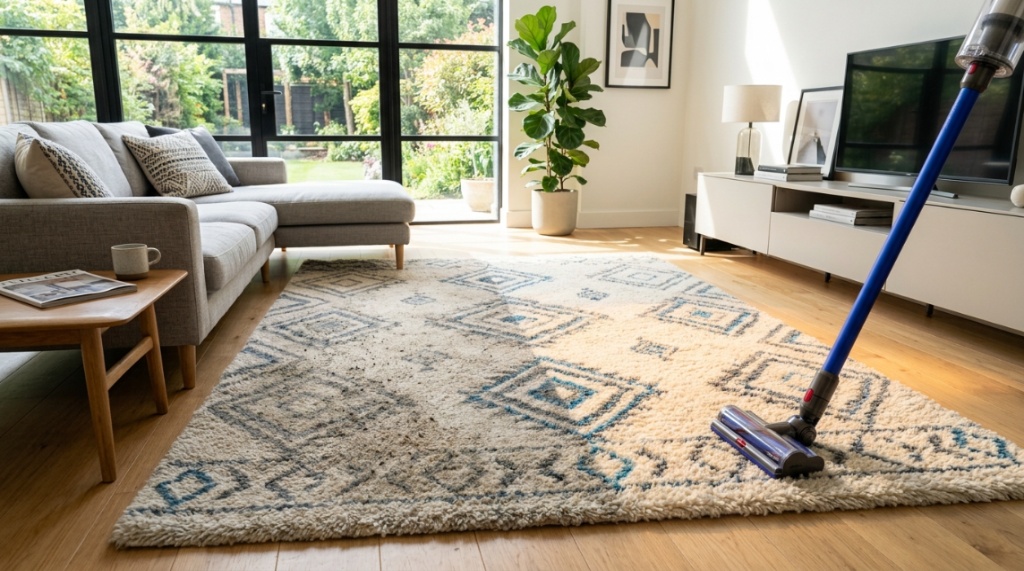
Washington’s climate is distinct: high humidity, frequent rainfall, and seasonal mud create stubborn cleaning challenges that generic vacuums often fail to address. Without the right machine, you’re just pushing dirt around.
Rain, Mud, and Moisture Challenges
From October through May, your entryway becomes a mud zone. Carpet near doors absorbs moisture, trapping soil deep in the fibers. A vacuum with a strong brush roll and a sealed system can extract this embedded grit. If your vacuum lacks a bare-floor setting, you’ll likely smear wet dirt rather than remove it.
Pet Hair and Dander in Smaller Living Spaces
Many Washingtonians live in apartments or smaller homes with pets. Dog hair bonds to dense carpets and upholstery. A vacuum with a tangle-free brush roll and high pet hair suction rating prevents constant brush jams. Without these features, you’ll spend more time cutting hair off the roller than cleaning.
Pollen and Seasonal Allergens
Spring in Washington brings a heavy pollen load. If your vacuum isn’t HEPA-sealed, it will blow allergens right back into the air. A true sealed system ensures that exhaust air is cleaner than room air, which is critical during allergy season in the Pacific Northwest.
Which Vacuum Types Deliver the Best Cleaning Power in Washington?
The ideal vacuum type depends on your home size, flooring mix, and lifestyle. However, certain categories consistently outperform others in Washington’s unique conditions.
Upright Vacuums: Best for Wall-to-Wall Carpet
Uprights with deep-cleaning brush rolls and manual height adjustment are ideal for the plush carpets common in suburban Washington homes. They offer strong airflow and wide cleaning paths. Look for models with at least 12 amps of power and a debris sensor that alerts you when the bin is full.
Canister Vacuums: Superior for Hard Floors and Stairs
Canister models excel on hardwood, tile, and laminate, which are common in newer Washington condos. Their motorized brush heads easily transition between floor types. They also shine on stairs, where bulky uprights struggle. A canister with a parquet brush and a HEPA filter is a top choice for mixed flooring.
Stick Vacuums: Lightweight but Limited
Cordless stick vacuums are convenient for quick pickups, but they often lack the agitation and capacity for deep cleaning. In Washington homes with thick carpets or significant pet hair, a stick vacuum should be a secondary tool, not your primary cleaner. Choose one with a removable battery and a brush roll shutoff for hard floors.
How to Choose the Right Motor and Suction for Your Flooring
Motor power and suction delivery are not the same. Matching these to your flooring type ensures you get the best cleaning power Washington homes require.
Motor Types: Brushed vs. Brushless
Brushed motors are older technology but can be more powerful per watt. However, they generate more heat and require brush replacements. Brushless motors are more efficient, quieter, and last longer. For Washington homes, a brushless motor with adjustable speed settings offers the best balance of power and reliability.
Suction Control for Multiple Surfaces
A vacuum with variable suction allows you to dial down power for delicate area rugs and crank it up for deep pile carpets. This prevents the vacuum from sucking up small rugs or scattering debris on hard floors. Look for a switch or trigger on the handle for easy adjustment.
Understanding Air Watts and CFM
Air Watts measure overall cleaning efficiency, combining suction and airflow. A rating of 200 Air Watts or higher is considered excellent for residential use. CFM (cubic feet per minute) should be at least 100 for adequate deep cleaning. Check both numbers, not just advertised peak suction.
Can a Budget Vacuum Deliver True Deep Cleaning?
Yes, but only if you choose wisely. Price does not always dictate performance, especially in the sub-$300 range. However, you must prioritize features over brand names.
Key Features to Prioritize Under $300
Focus on vacuums with a motorized brush roll, at least a five-stage filtration system, and a large dustbin (0.8 gallons or more). Avoid models that advertise “cyclonic” action without a washable filter, as they often lose suction quickly. Brands like Bissell, Hoover, and Kenmore often offer excellent value in this range.
Trade-Offs You Can’t Ignore
Budget vacuums often have shorter cords, smaller bins, and less durable plastic. They may lack sealed HEPA systems, which is a concern for allergy sufferers. If your home has thick carpet or significant pet hair, you may need to empty the bin mid-cleaning. Plan for more frequent filter replacements.
Where to Save and Where to Invest
Spend money on a good brush roll and filtration. Save on extra attachments and fancy displays. A simple design with a reliable motor and a washable filter will outlast a feature-heavy model that breaks within a year. Check user reviews for long-term reliability reports.
How to Maintain Your Vacuum for Consistent Cleaning Power
Even the best vacuum loses performance without proper maintenance. In Washington’s dusty and damp conditions, regular care is essential to maintain peak cleaning efficiency.
Clean or Replace Filters Every 1-3 Months
HEPA filters clog faster in humid environments. Wash foam filters monthly and replace HEPA media filters every three months or sooner if you notice a loss in suction. A clogged filter reduces airflow by up to 50%, making your vacuum ineffective.
Check the Brush Roll for Hair and Debris
Washington homes with pets generate significant hair tangles. Inspect the brush roll after every few uses. Cut away hair and string with scissors. A tangled brush roll stops agitating, turning your deep cleaner into a simple surface sweeper.
Empty the Dustbin Regularly
Don’t wait until the bin is full. Empty it after every use, especially if you have pets or are cleaning after wet weather. A full bin reduces airflow and forces the motor to work harder, shortening the vacuum’s lifespan. Tap the bin outside to release fine dust before washing, Achieving the best cleaning power in WA means using a machine that seamlessly adapts to both thick carpets and slick tile floors. However, choosing the wrong model can severely limit your efficiency. Before making a investment, make sure to read our guide on Multi-Surface: Avoid Common Mistakes When Buying a Shark Vacuum so you get the exact performance your home layout requires.
Which Attachments Boost Cleaning Power for Specific Tasks?
Attachments are not accessories; they are tools that extend your vacuum’s capabilities. The right attachments can turn a mediocre vacuum into a Washington-cleaning powerhouse.
The Crevice Tool for Baseboards and Corners
Washington homes with baseboard heating or wide trim collect dust and pet hair in corners. A long, thin crevice tool with a brush tip allows you to dislodge and remove debris from tight spaces. Use it weekly to prevent buildup.
The Turbo Brush for Upholstery and Stairs
A motorized turbo brush is essential for cleaning couches, car interiors, and stairs. It agitates fabric fibers to release pet hair and dirt. Without it, these areas remain unsanitary. Choose a brush with a clear housing so you can see when it needs cleaning.
Hard Floor Brush for Protecting Wood and Tile
A dedicated hard floor brush with soft bristles or a felt strip prevents scratches and scuffs on Washington’s popular hardwood and luxury vinyl plank floors. It sweeps debris into the airflow path rather than scattering it. Use this for daily maintenance on polished floors.
Is Cordless Convenience Worth the Loss of Power?
Cordless vacuums offer freedom of movement, but they typically sacrifice suction and runtime. For Washington homes, the trade-off might be acceptable for small spaces but not for deep cleaning.
Battery Runtime vs. Cleaning Time
Most cordless vacuums claim 30-60 minutes of runtime, but this drops significantly on high power. You often get only 10-15 minutes of deep-cleaning mode, which is barely enough for a single bedroom. If your home is over 1,500 square feet, a corded vacuum remains more reliable.
Suction Degradation Over Battery Life
As the battery drains, suction decreases. This means the last half of your cleaning session is less effective. Some high-end models maintain constant power until fully discharged, but these cost significantly more. Check for “constant suction” technology in product descriptions.
Best Use Cases for Cordless Models in Washington
Use a cordless stick vacuum for daily quick picks of crumbs, pet hair from tile floors, and dust from entryways. Keep a corded upright or canister for weekly deep cleaning of carpets and area rugs. This two-vacuum strategy balances convenience with true cleaning power.
How to Test if Your Vacuum Has Lost Cleaning Power
You don’t need expensive tools to measure performance. Simple at-home tests can tell you if your vacuum is still delivering effective deep cleaning.
The Carpet Line Test
Suck up a line of uncooked rice or dry oats from a low-pile carpet. If the vacuum leaves more than a few grains after a single pass, it is losing suction or agitation. A healthy vacuum should pick up 95% of the debris in one pass.
The Hand Vacuum Test
Place your hand over the end of the hose or wand. You should feel strong suction that is difficult to break. If the suction feels weak or intermittent, check the hose for clogs, the filter for blockage, and the dustbin for full capacity.
The Brush Roll Spin Test
Turn the vacuum over and watch the brush roll spin. It should rotate freely with consistent speed. If it stutters, stops, or sounds like it is hitting something, it is likely tangled with hair or string. Clean the brush roll immediately to restore agitation power.
Frequently Asked Questions
Why does my vacuum lose suction so fast in Washington?
High humidity causes dust and debris to clump together, clogging filters and hoses more quickly. Regularly washing filters and emptying the dustbin after each use can prevent rapid suction loss in damp environments.
Can I use a regular vacuum on wet carpet from rain?
No. Standard vacuums are not designed for moisture and can short-circuit or grow mold inside. For wet carpet, use a wet/dry shop vacuum. For damp floors, allow them to dry completely before using a standard vacuum.
Are bagless vacuums less powerful than bagged models?
Not inherently. Bagless vacuums can be equally powerful, but their filters require more frequent cleaning. Bagged vacuums maintain suction longer because the filter stays cleaner. For Washington homes with allergies, bagged models with HEPA bags are often better for trapping fine particles.
What is the best vacuum for pet hair in Washington apartments?
A canister vacuum with a motorized pet turbo brush and sealed HEPA filtration is ideal. It handles pet hair on carpet, upholstery, and hardwood. Look for a model with a tangle-avoidance brush roll to minimize maintenance.
How often should I replace my vacuum if I live in Washington?
With proper maintenance, a quality vacuum should last 5-7 years. Replace it sooner if you notice persistent loss of suction, unusual motor noise, or if the brush roll no longer agitates effectively. Upgrading every 4-5 years can ensure you have modern filtration and power features.
Does the “air watt” rating really matter?
Yes. Air watts combine suction and airflow into one metric. A rating above 200 Air Watts indicates strong deep-cleaning ability. It is a more reliable indicator of real-world performance than peak suction in pascals or inches of water lift.
Can a stick vacuum replace an upright for deep cleaning?
Only in very small homes with mostly hard floors. For wall-to-wall carpet or homes with pets, a stick vacuum lacks the agitation and bin capacity for deep cleaning. Use a stick for daily touch-ups and an upright for weekly deep cleaning.
Conclusion: Your Path to Consistently Clean Floors
Getting the best cleaning power in Washington starts with understanding your environment. You need a vacuum that handles moisture, deep carpet fibers, and fine allergens without losing steam. Focus on airflow, agitation, and sealed HEPA filtration rather than just marketing numbers. Test your machine regularly and perform simple maintenance to keep it performing at its peak. Whether you choose a budget-friendly upright or a premium canister, the right combination of features will make your home feel genuinely clean, even after a rainy week. Ready to find your perfect match? Click the link above to explore top-rated models designed specifically for Washington homes.