
You love your pets, but you don’t love the fur they leave behind on your rugs, hardwood floors, and upholstery. If you are tired of wrestling a bulky upright vacuum around furniture or watching pet hair clog your current machine, you need a specialized solution. Canister vacuums offer superior maneuverability and often deliver better suction for deep cleaning fur. However, finding the top canister vacuum for pet hair requires looking beyond basic specs. This guide cuts through the marketing noise to give you a practical, actionable roadmap for choosing the right machine that will keep your home fur-free without draining your bank account.
What Makes a Canister Vacuum Better for Pet Hair Than an Upright?
A canister vacuum is often superior for pet hair because its design separates the motor and collection unit from the cleaning head, allowing for much better airflow and a lighter touch when cleaning around furniture legs and stairs.
The Engineering Advantage of Canister Designs
Upright vacuums rely on the entire machine moving across the floor, which can disrupt airflow and reduce suction as the bag or bin fills up. Canister vacuums use a sealed system and a wand, meaning the suction power remains incredibly consistent regardless of how full the canister gets. This sealed suction is critical for lifting deeply embedded pet dander and hair from carpet fibers.
Maneuverability and Reach
Pet hair tends to accumulate under beds, sofas, and in tight corners. With a canister, you carry the lightweight unit on your shoulder or roll it behind you while the wand glides effortlessly. This lets you snake the tool under low-profile furniture without moving heavy pieces, making your cleaning routine much faster.
Better Filtration for Allergens
Pet dander is a primary allergen. Most top-tier canister vacuums for pet hair feature true HEPA filtration. Unlike many upright vacuums, which may have leaky seals, a well-designed canister traps 99.97% of particles, ensuring the hair and dander you pick up don’t get blown back into the air for you to breathe.
Which Type of Canister Vacuum Is Best for Heavy Pet Shedding?
For heavy shedding, you need a canister vacuum with a powerful motor (at least 12 amps or 200+ air watts) and a motorized brush roll that actively agitates the carpet to loosen hair.
Bagged vs. Bagless for Pet Owners
This is a critical decision. Bagless vacuums save you money on bags, but emptying the bin can be a dusty, allergen-releasing nightmare. Bagged canisters maintain better hygiene because you toss the sealed bag away without touching the debris. For pet owners with allergies, a bagged HEPA model is often the better choice despite the recurring cost of bags.
The Importance of the Power Nozzle
Not all canisters come with a motorized power head (power nozzle). If you have wall-to-wall carpet, a model without a motorized brush will simply float over the hair. Look for a canister that specifically includes a “pet power head” or “motorized floor nozzle” that has a brush roll designed to handle long hair without tangling.
Suction Control for Mixed Flooring
If you have both hardwood floors and thick carpets, you need a vacuum with adjustable suction. A high setting on bare floors will blow dust around, while a low setting on carpet won’t dig out the hair. The top canister vacuum for pet hair should offer a variable suction slider on the handle or wand for easy adjustment.
How to Evaluate Suction Power and Airflow for Pet Hair
Don’t just look at amp ratings; focus on “Air Watts” (AW) and sealed suction (inches of water lift). A vacuum with around 150 AW is capable, but 200+ AW is ideal for heavy pet hair in thick carpets.
Understanding the Metrics
- Air Watts (AW): This measures the overall cleaning efficiency combining airflow and suction. It is the most reliable spec for comparing pet hair performance.
- Water Lift: This measures how strong the suction is against an airtight seal. Higher numbers are better for deep carpet cleaning.
- CFM (Cubic Feet per Minute): This measures the volume of air moving. You need a balance of high suction (water lift) and high airflow (CFM) to move air through the brush roll and lift heavy fur.
The “Hair Wrap” Problem
One of the biggest frustrations with pet vacuums is hair wrapping around the brush roll. Look for models with a “self-cleaning” brush roll or a “tangle-free” design. These often have a unique comb or a brush roll that stands away from the bristles to cut hair off and suck it into the bin.
Which Features Are Essential for a Pet Hair Canister Vacuum?
Beyond suction, specific features can make or break your experience. The best models prioritize hair management, filtration, and floor tool quality.
HEPA Filtration and Sealed Systems
A “HEPA filter” is useless if the vacuum body leaks air. You need a “sealed HEPA system.” This ensures all the air that enters the vacuum passes through the HEPA filter before being exhausted, trapping pet dander, mold spores, and dust mites.
Wand and Hose Length
Pet hair gets everywhere, including stairs and ceilings (cobwebs with hair). A long hose (at least 6 feet) and a telescopic wand (reaching 30+ inches) allow you to reach high curtains and low baseboards without moving the canister.
Tool Kit for Pet Owners
- Mini Motorized Tool: Essential for upholstery and stairs. This is often a deal-breaker.
- Crevice Tool: Must be long and narrow to get between couch cushions.
- Dusting Brush: Useful for baseboards and lamp shades where pet dander settles.
Why Is a Self-Cleaning Brush Roll a Game-Changer for Pet Hair?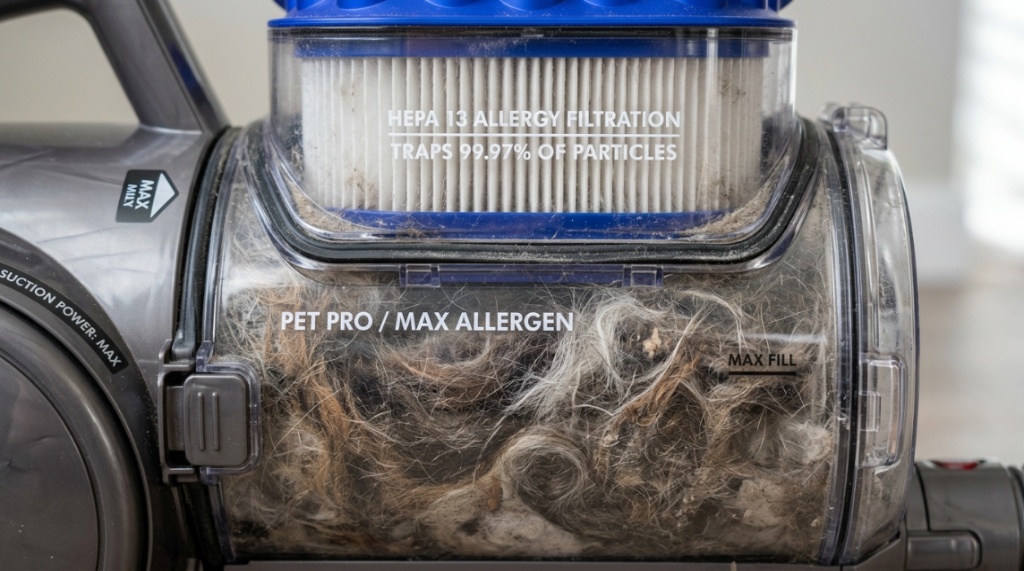
A self-cleaning brush roll actively cuts hair away from the bristles as you clean, preventing the common “scissor job” cleanup that pet owners usually have to do.
How It Works
These systems typically use a set of stationary combs or ridges that sit between the rotating bristles. As the brush turns, the combs intercept hair before it can wrap tightly around the shaft. This keeps the brush spinning at maximum speed and maintaining optimal carpet agitation.
The Time-Saving Benefit
Without this feature, you will spend 5 to 10 minutes per cleaning session cutting hair off the brush with a seam ripper. Over a year, that is hours of lost time. Paying a premium for this feature directly improves your daily efficiency.
Cons to Consider
While excellent, self-cleaning brush rolls can sometimes be louder than standard ones due to the comb mechanism. They also require you to empty the bin more frequently because the hair is actively being shed into the suction path, filling the bin faster with concentrated fur.
How Much Should You Spend on a Top Canister Vacuum for Pet Hair?
You can find a competent model for around $200, but the best performance and durability for severe pet hair situations typically require a budget of $300 to $600.
Budget Tier ($150 – $250)
In this range, you usually get bagless models with decent suction but plastic components. They often lack self-cleaning brush rolls and may have lower-quality HEPA filters. Ideal for apartments or single-pet homes.
Mid-Range Tier ($300 – $450)
This is the “sweet spot.” You find bagged options with excellent HEPA seals, better build quality, motorized pet tools, and adjustable suction. Brands like Miele and Kenmore dominate this space. This is where you will find a top canister vacuum for pet hair that balances cost and longevity.
Premium Tier ($500+)
High-end German and Swedish models offer powerful cleaning, whisper-quiet operation, and extremely durable construction. However, the bag costs and replacement part prices are significantly higher. These are best for large homes with multiple pets and integrated carpet.
Can a Bagless Canister Vacuum Handle Pet Hair Without Clogging?
Yes, but only if the cyclonic separation is strong enough to fling hair into the bin rather than letting it wrap around the pre-motor filter. Cheap bagless canisters often clog within minutes of cleaning dog hair.
The Filter Clogging Issue
Pet hair is static-heavy and fibrous. In a bagless vacuum, the hair can cling to the mesh cone or the pre-motor filter, blocking airflow. This causes the vacuum to lose suction rapidly. To prevent this, you must empty the bin very frequently—sometimes after every room. When upgrading your cleaning setup, knowing what to look for prevents costly errors. Before making your final purchase, make sure to read our guide on avoid common mistakes when buying a Shark vacuum to ensure you pick the right model for your home and furry friends.
When to Choose Bagless
Choose bagless if you have a strict budget and don’t mind the dust exposure during emptying. You must also be diligent about washing the foam filter every month. If you cannot commit to that maintenance, a bagged model is actually cheaper in the long run due to better filter longevity.
What Is the Best Floor Nozzle for Pet Hair on Hardwood?
For hardwood floors, you must avoid a brush roll that scratches. The ideal floor nozzle is a “combination head” that allows you to turn off the brush roll or use a dedicated “hard floor” parquet brush.
The Felt or Microfiber Pad
Many top-tier canisters come with a parquet floor tool that uses a soft felt strip or microfiber pad. This glides over wood and tile, picking up hair and dust without scattering it. This tool works wonders for capturing fine pet dust that a rubber blade might miss.
Rubber Fins vs. Nylon Bristles
For sheer hair pickup on hard floors, rubber fins are superior to nylon bristles. Rubber creates static and “grips” the hair, pulling it off the floor. Look for a floor head with alternating rubber fins and soft bristles for the best “one pass” cleaning of pet hair.
Is a Miele or a Kenmore Canister Better for Pet Hair?
Generally, Miele offers better filtration and build quality, while Kenmore offers better value and raw suction power for deep cleaning heavy carpets.
Miele: The Premium Standard
Miele vacuums are built to last 20+ years. Their “AirClean” sealed system is outstanding for allergies. However, their entry-level models ($400) often lack a motorized brush roll, meaning they are bad on carpet. You need a Miele “Cat & Dog” series to get the proper power head, which costs over $700.
Kenmore: The Powerhouse Value
Kenmore canisters (like the 600 and 800 series) offer industry-leading suction (140+ inches of water lift) which is incredible for pulling embedded pet hair out of high-pile carpet. They come with excellent pet tools and are much more affordable. Their filtration is good, but not quite hospital-grade like Miele’s.
Our Verdict
If you have mostly hard floors and a single cat, Miele wins. If you have wall-to-wall carpet and two large shedding dogs, the Kenmore 800 series is likely the better tool for the job.
How to Maintain Your Canister Vacuum to Prevent Pet Hair Smells
Pet hair carries oils and bacteria. If you don’t maintain your vacuum, it will start to smell like “wet dog” within a few months. Proper maintenance is essential for hygiene.
Monthly Filter Cleaning
If you have a bagless unit, wash the foam pre-filter and the HEPA post-filter (if washable) monthly. Let them dry for 24 hours before reinstalling. Never put a wet filter back in—this causes mold and bad smells.
Clearing the Brush Roll
Even with self-cleaning brushes, check the ends of the brush roll monthly. Hair often builds up on the bearings at the sides. Use a screwdriver to remove the plate and clear out the “hair donuts” that form there.
Deodorizing the Hose
Run a dryer sheet or a vacuum deodorizer pellet through the hose once a month. Alternatively, vacuum up a small amount of baking soda from the carpet to neutralize odors inside the machine.
Frequently Asked Questions
Can I use a canister vacuum on a thick shag rug?
Yes, but you must use a canister with a variable height adjustment or a motorized brush roll that can raise up. Most power nozzles have a foot pedal to adjust for high pile, preventing the suction from locking onto the rug.
How often should I replace the bag in a pet hair canister?
Replace the bag when it is about 2/3 full. Pet hair compresses differently than dust. Overfilling the bag reduces suction significantly. For a two-pet household, you may need a new bag every 3 to 4 weeks.
Why does my canister vacuum smell like burning rubber?
This is usually caused by hair wrapped tightly around the brush roll pulley or belt. Stop the vacuum immediately and remove the hair from the brush roll. If the belt is stretched or melted, replace it.
Is a cordless canister vacuum good enough for pet hair?
Generally, no. Cordless canisters lack the sustained suction power and runtime needed for deep carpet cleaning. They are excellent for quick pickups on hard floors but should not be your primary machine if you have heavy shedding carpets.
What is the difference between a “pet” model and a regular canister?
A “pet” model usually includes a turbo brush or mini motorized tool for upholstery, a stronger motor, and a heavier-duty filter. However, sometimes “pet” just means a richer color. Always check the specific tool list and suction specs.
Can a canister vacuum scratch my hardwood floors?
Not if you use the correct floor head. Always use a felt or rubber combination nozzle for hard floors. Never use a beater bar (rotating brush) on hardwood, as the bristles can cause micro-scratches over time.
Where can I find the best deals on high-end canister vacuums?
Check factory refurbished storefronts from Miele and Kenmore. Many “customer returns” are simply opened boxes with dents. You can often save 30-40% on a like-new vacuum with a full warranty.