
Maintaining a sparkling clean pool is every pool owner’s dream. However, achieving this requires regular maintenance and one of the most critical tasks is backwashing your pool filter. According to the Pool & Hot Tub Alliance, 85% of pool water issues stem from improper filtration. Backwashing not only improves water clarity but also extends the life of your filter, saving you money in the long run. In this guide, we’ll walk you through the steps to backwash pool filter. From understanding what backwashing is to actionable tips and troubleshooting, this article has you covered. Let’s dive in!
What Is Backwashing and Why Is It Important?
Backwashing is the process of reversing the flow of water through your pool filter to flush out trapped debris and contaminants. Over time, dirt, leaves, and other particles clog the filter, reducing its efficiency. Backwashing clears these obstructions, ensuring your filter operates at peak performance.
According to a study by the Centers for Disease Control and Prevention (CDC), poorly maintained pools can harbor harmful bacteria like E. coli and Legionella. Regular backwashing helps prevent these health risks by maintaining clean, safe water.
Additionally, backwashing can save you money. A clogged filter forces your pump to work harder, increasing energy consumption by up to 25%. By backwashing regularly, you can reduce energy costs and extend the lifespan of your equipment. Do you know how much is a pool cleaning? Discover now!
Types of Pool Filters and Their Backwashing Needs
Not all pool filters are the same, and each type requires a slightly different backwashing approach. Here’s a breakdown of the three main types:
1. Sand Filters
Sand filters are the most common and easiest to maintain. They use fine sand to trap debris. Over time, the sand becomes clogged, and backwashing is required to clean it.
How Often to Backwash: Typically, every 1-2 weeks, depending on pool usage.
2. Cartridge Filters
Cartridge filters use a pleated fabric to capture debris. Unlike sand filters, they don’t require backwashing. Instead, you remove and rinse the cartridge manually.
How Often to Clean: Every 4-6 weeks, or when the pressure gauge indicates a 8-10 psi increase.
3. Diatomaceous Earth (DE) Filters
DE filters use a fine powder to trap particles, offering the highest level of filtration. They require backwashing and occasional recharging with fresh DE powder.
How Often to Backwash: Every 4-6 weeks, or when the pressure gauge rises by 8-10 psi.
Step-by-Step Guide to Backwash Pool Filter
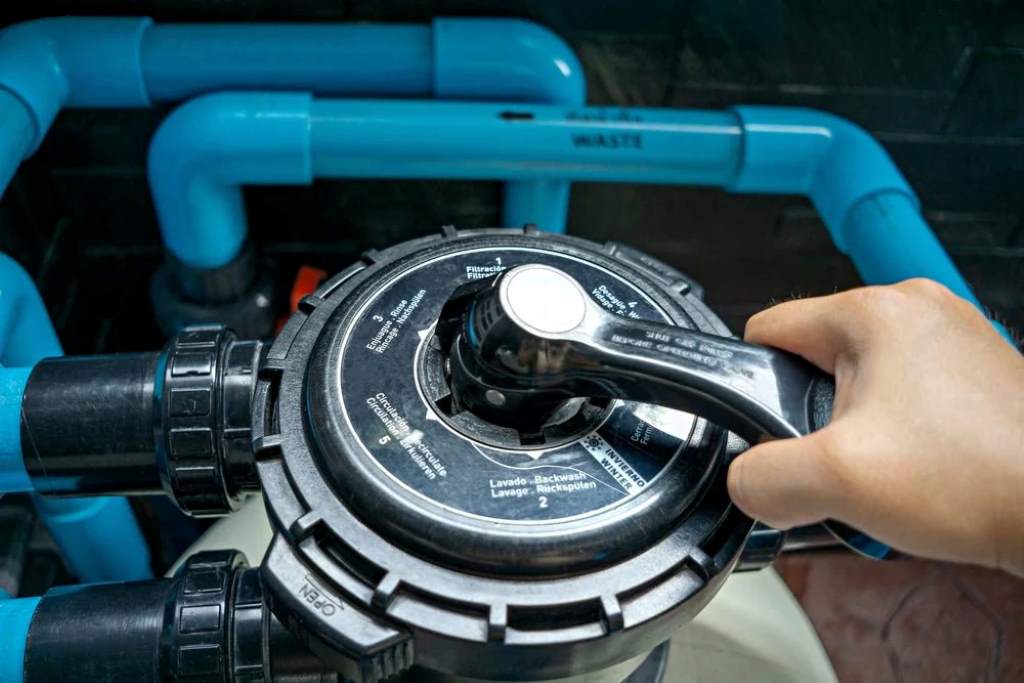
Step 1: Turn Off the Pool Pump
Always start by turning off the pump to ensure safety. This prevents water from flowing while you’re working on the filter.
Step 2: Set the Multiport Valve to Backwash
Locate the multiport valve on your filter system. Turn the handle to the “Backwash” position. This reverses the water flow, flushing out debris.
Step 3: Turn the Pump Back On
Switch the pump back on and let it run for 2-3 minutes. You’ll see dirty water exiting through the waste line.
Step 4: Rinse the Filter
After backwashing, set the valve to “Rinse” and run the pump for 30-60 seconds. This clears any remaining debris from the system.
Step 5: Return to Normal Filtration
Finally, set the valve to “Filter” and resume normal operation. Your filter should now be clean and efficient.
Tips for Effective Backwashing
- Monitor Pressure Gauge: Backwash when the pressure gauge reads 8-10 psi above the normal operating level.
- Check Water Clarity: If your water looks cloudy, it’s time to backwash.
- Inspect Waste Water: If the waste water remains dirty after backwashing, repeat the process.
- Maintain a Schedule: Regular backwashing prevents clogs and extends filter life.
Common Mistakes to Avoid
- Backwashing Too Often: Excessive backwashing can waste water and reduce filter efficiency.
- Ignoring the Pressure Gauge: Failing to monitor pressure can lead to pump damage.
- Skipping the Rinse Cycle: This leaves debris in the system, reducing filtration quality.
A few years ago, I neglected to backwash my sand filter for over a month. The result? Cloudy water and a pump that sounded like it was struggling. After backwashing, the water cleared up within hours, and the pump returned to normal. This experience taught me the importance of regular maintenance.
Conclusion
Backwashing your pool filter is a simple yet essential task that keeps your pool clean, safe, and energy-efficient. By following the steps and tips outlined in this guide, you can ensure your filter operates at peak performance.
Ready to take your pool maintenance to the next level? Share your thoughts in the comments below or explore our related articles on pool care. Don’t forget to bookmark this guide for future reference!
FAQs
How often should I backwash my pool filter?
Backwash your sand or DE filter every 1-2 weeks or when the pressure gauge rises by 8-10 psi. Cartridge filters require manual cleaning every 4-6 weeks.
Can I backwash a cartridge filter?
No, cartridge filters don’t require backwashing. Instead, remove and rinse the cartridge manually.
What happens if I don’t backwash my filter?
A clogged filter reduces water flow, strains the pump, and leads to cloudy, unsafe water.
How long should I backwash my filter?
Backwash for 2-3 minutes or until the waste water runs clear. Follow up with a 30-60 second rinse cycle.
Does backwashing waste water?
Yes, backwashing uses water, but it’s necessary for maintaining filter efficiency. Consider recycling the waste water for landscaping if possible.