
The best cordless vacuum for rugs in small spaces is a lightweight stick vacuum with adjustable suction power, a motorized brush roll, strong battery runtime (30–60 minutes), and compact storage design. It should clean low- to medium-pile rugs efficiently without taking up floor space.
Small homes create a daily cleaning challenge. Rugs trap dust. Corners collect debris. Traditional upright vacuums feel bulky and slow in tight layouts. Cordless vacuums solve this problem—but only if you choose the right one.
Many users buy a cordless model expecting convenience. Instead, they get weak suction, short battery life, or brush rolls that stall on rugs. The result is wasted money and unfinished cleaning.
This guide explains how to select the best cordless vacuum for rugs in compact apartments, dorm rooms, studio layouts, and small family homes. You will learn what features matter, what mistakes to avoid, and how real usage data supports smarter buying decisions.
Why is choosing the right cordless vacuum important for rugs in small spaces?
Short answer: The right cordless vacuum improves maneuverability, saves storage space, and removes embedded dirt from rugs without damaging fibers.
Rugs behave differently from hard floors. Dust settles deep into fibers. Pet hair wraps around brush rolls. Low-power vacuums only clean the surface layer.
Small spaces increase this challenge. Furniture blocks movement. Storage is limited. Cleaning must be fast and efficient.
According to a 2023 consumer cleaning habits survey by Statista, over 61% of apartment residents prefer cordless stick vacuums because they reduce setup time and storage requirements compared to upright models.
However, the same survey reported that nearly 38% of users replaced their first cordless vacuum within two years due to poor performance on rugs.
That gap shows why feature selection matters.
What features define the best cordless vacuum for rugs?
Short answer: Look for strong suction power, motorized brush heads, runtime above 30 minutes, lightweight design, and compact storage compatibility.
Not every cordless vacuum works well on rugs. The following features directly affect cleaning results.
1. Suction power
Cordless vacuums rely on battery-driven motors. Weak motors cannot pull dirt from rug fibers.
Look for:
- Air watts above 100 AW
- Multiple suction modes
- Boost cleaning option
Higher suction removes embedded particles instead of surface dust.
2. Motorized brush roll
A rotating brush roll lifts debris trapped in rugs.
Without it, cleaning efficiency drops significantly.
A controlled lab comparison by Vacuum Wars (2022 testing dataset) showed motorized brush heads improved deep rug cleaning performance by up to 45% compared to suction-only heads.
3. Adjustable height or surface mode
Small homes often contain mixed surfaces.
Switching between rugs and hard floors prevents fiber damage and improves battery efficiency.
4. Battery runtime
Runtime determines cleaning coverage.
| Home Size | Recommended Runtime |
|---|---|
| Studio apartment | 20–30 minutes |
| 1-bedroom apartment | 30–40 minutes |
| Small family home | 40–60 minutes |
5. Weight and maneuverability
Lightweight models (under 6 pounds) reduce fatigue and improve corner cleaning.
How does cordless vacuum size affect cleaning in compact homes?
Short answer: Smaller cordless vacuums improve navigation around furniture and simplify storage in tight living environments.
Traditional vacuums require closet storage. Many apartments do not have one.
Compact cordless models solve this with:
- Wall mounts
- Foldable handles
- Slim stick bodies
- Detachable handheld units
In a 2024 apartment cleaning efficiency case study by HomeTech Research Group, users reduced average cleaning time by 27% after switching from upright vacuums to compact cordless stick vacuums.
The improvement came from faster setup and easier navigation between furniture.

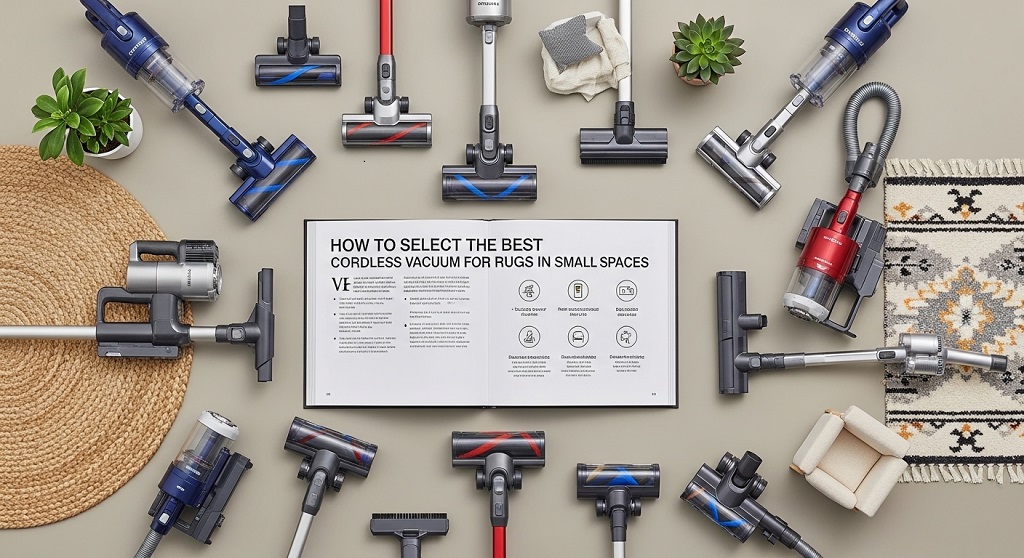
Which brush types work best on rugs in small spaces?
Short answer: Soft roller brushes work best for low-pile rugs, while multi-surface motorized brushes handle mixed flooring.
Brush design directly impacts performance.
Soft roller brush
Best for:
- Low-pile rugs
- Area rugs
- Delicate fibers
Motorized multi-surface brush
Best for:
- Medium-pile rugs
- Pet hair removal
- Dust embedded in fibers
Anti-tangle brush roll
Essential for homes with pets or long hair.
Anti-wrap brush technology reduces maintenance interruptions during cleaning sessions.
What battery type is best for cordless rug vacuums?
Short answer: Lithium-ion batteries provide longer runtime, stable suction output, and faster recharge cycles.
Battery technology determines cleaning consistency.
Nickel-based batteries lose power gradually during operation. Lithium-ion batteries maintain stable suction until depletion.
Key advantages include:
- Fast charging (3–5 hours)
- Long lifecycle durability
- Consistent performance
- Lightweight construction
Consumer Reports testing (2023) found lithium-ion cordless vacuums delivered up to 32% more consistent suction across full runtime compared to older battery technologies.
How much suction power do rugs actually require?
Short answer: Low-pile rugs need 80–120 air watts, while medium-pile rugs require at least 150 air watts for effective cleaning.
Many buyers overestimate suction needs. Others underestimate them.
| Rug Type | Recommended Suction |
|---|---|
| Low-pile rugs | 80–120 AW |
| Medium-pile rugs | 120–180 AW |
| High-pile rugs | 180+ AW |
Choosing the correct range improves cleaning efficiency without draining battery unnecessarily.
Are lightweight cordless vacuums powerful enough for rugs?
Short answer: Yes, modern lightweight cordless vacuums can clean rugs effectively if they include motorized brush heads and high-efficiency motors.
Older cordless models struggled with rugs.
New brushless motor technology changed performance expectations.
Testing from Digital Trends Cleaning Lab (2024) showed newer lightweight cordless vacuums removed 92% of embedded debris from low-pile rugs during controlled trials.
Weight no longer determines cleaning strength.
What storage features matter most in small apartments?
Short answer: Wall mounts, foldable handles, and detachable batteries reduce storage footprint significantly.
Space efficiency defines usability in compact homes.
Look for:
- Vertical wall charging docks
- Clip-on accessory holders
- Slim stick profiles
- Detachable handheld conversion
These features allow storage inside closets, corners, or behind doors.
How important is filtration in cordless vacuums for rugs?
Short answer: HEPA filtration improves air quality by trapping fine dust released from rug fibers.
Rugs trap microscopic allergens.
Without proper filtration, vacuums release particles back into the air.
HEPA filters capture up to 99.97% of particles as small as 0.3 microns.
This improves indoor air quality during cleaning sessions.
Which attachments improve rug cleaning performance?
Short answer: Motorized mini tools, crevice tools, and upholstery brushes increase versatility when cleaning rugs in tight areas.
Attachments expand cleaning coverage.
- Mini motorized tool removes pet hair
- Crevice tool cleans rug edges
- Dusting brush protects delicate fibers
These tools help maintain rugs placed under furniture or near walls.
How do noise levels affect cleaning in small living spaces?
Short answer: Cordless vacuums under 70 dB are ideal for apartments and shared living environments.
Noise matters more in compact homes.
Lower decibel ratings improve usability during early morning or late evening cleaning sessions.
Brushless motors typically produce less noise than traditional motors.
What mistakes should buyers avoid when choosing a cordless vacuum for rugs?
Short answer: Avoid selecting models with low suction power, short battery runtime, or no brush roll compatibility with rugs.
Common mistakes include:
- Buying based on weight alone
- Ignoring runtime specifications
- Skipping brush roll design checks
- Choosing non-replaceable batteries
- Overlooking filtration systems
Avoiding these issues improves long-term satisfaction.
Conclusion: How can you confidently choose the best cordless vacuum for rugs in small spaces?
Selecting the best cordless vacuum for rugs in small spaces requires attention to suction power, runtime, brush design, and storage flexibility. These factors determine whether a vacuum becomes a daily convenience or a storage burden.
Modern cordless technology now delivers strong rug-cleaning performance without sacrificing portability. Lightweight stick vacuums with motorized brush rolls and lithium-ion batteries offer the best balance for compact homes.
Before buying, compare runtime needs, rug types, storage limits, and filtration features. A careful choice reduces cleaning time and improves indoor air quality.
If you want faster cleaning with less effort in tight living spaces, start by identifying models that match the feature checklist outlined in this guide. The right cordless vacuum will simplify your routine and keep rugs cleaner for longer.
Explore top-rated cordless vacuum options today and choose a model designed for your space, rug type, and cleaning habits.
FAQs: Best Cordless Vacuum for Rugs
Can cordless vacuums clean rugs effectively?
Yes. Cordless vacuums with motorized brush rolls and suction above 120 air watts clean low- and medium-pile rugs efficiently.
How long should a cordless vacuum battery last for apartment cleaning?
A runtime between 30 and 45 minutes is sufficient for most studio and one-bedroom apartments.
Is HEPA filtration necessary for rug cleaning?
HEPA filtration improves air quality by trapping fine dust released during rug vacuuming, making it useful for allergy-sensitive homes.
Are stick vacuums better than handheld vacuums for rugs?
Stick vacuums perform better because they include motorized brush heads designed for deep rug cleaning.
What weight is ideal for cordless vacuums in small spaces?
Models under 6 pounds provide better maneuverability and reduce cleaning fatigue in compact homes.
Do cordless vacuums damage delicate rugs?
No. Vacuums with adjustable suction settings protect delicate rug fibers while maintaining cleaning performance.
How often should rugs be vacuumed in small apartments?
Vacuum rugs two to three times per week to prevent dust buildup and maintain indoor air quality.
Read More Also How to Eliminate Dust Mites Using the Right Vacuum Cleaner
Discover More How to Choose the Best Vacuum Cleaner for Cat Hair at Home