
The living room, often the heart of the home, transforms into a cinematic haven when it’s time to watch TV. However, an immersive viewing experience isn’t solely dependent on the quality of your screen or sound system. The unsung hero? Lighting. Achieving the perfect balance of illumination can drastically enhance your enjoyment, reducing eye strain, improving picture clarity, and creating a truly captivating atmosphere. But with a plethora of options available, navigating the world of living room TV lighting can feel overwhelming. This article aims to decode the complexities, providing a comprehensive guide to crafting the ideal viewing environment.
Understanding the Enemy: Glare and Eye Strain
Before diving into solutions, it’s crucial to understand the problems we’re trying to solve. Glare, caused by light reflecting off the TV screen, is a primary culprit for visual discomfort. It distorts colors, washes out details, and forces your eyes to work harder, leading to fatigue and headaches. Similarly, viewing a bright screen in a completely dark room creates a stark contrast that strains your eyes as they constantly adjust between the bright screen and the surrounding darkness. The goal, therefore, is to create a balanced lighting environment that minimizes glare and reduces eye strain.
The Importance of Ambient Lighting: Setting the Stage
Ambient lighting, the general, overall illumination of a room, forms the foundation of a comfortable viewing experience. It should be soft, diffused, and avoid direct reflections on the TV screen. Recessed ceiling lights, strategically placed floor lamps, or wall sconces are excellent options. Dimmers are highly recommended, allowing you to fine-tune the brightness to suit your preferences and the content you’re watching. Opt for warm, neutral tones (around 2700-3000K) for a cozy and inviting atmosphere. Avoid harsh, bright overhead lights that can create glare and wash out the screen.
Bias Lighting: The Secret Weapon Against Eye Strain
Bias lighting, placing a light source behind the TV, is a game-changer for reducing eye strain. It creates a soft glow that surrounds the screen, minimizing the contrast between the bright screen and the dark surroundings. This reduces eye fatigue and enhances perceived picture quality. LED strip lights, specifically designed for bias lighting, are readily available and easy to install. Choose a color temperature close to 6500K (daylight) for optimal results. Ensure the light is evenly distributed behind the TV, avoiding direct reflections on the wall. The intensity should be subtle, creating a gentle halo effect rather than a distracting spotlight.
Task Lighting: Enhancing Functionality and Aesthetics
While ambient and bias lighting create the overall atmosphere, task lighting provides focused illumination for specific activities. Reading lamps near seating areas, adjustable floor lamps for crafting or hobbies, and accent lights highlighting artwork or architectural features can add both functionality and aesthetic appeal to your living room. When choosing task lighting, consider the direction and intensity of the light, ensuring it doesn’t interfere with the TV viewing experience. Dimmers and adjustable shades are valuable features for controlling the light output and direction.
The Power of Smart Lighting: Customization and Control
Smart lighting systems offer unparalleled customization and control over your living room lighting. With smart bulbs, switches, and hubs, you can adjust brightness, color temperature, and even create dynamic lighting scenes with your smartphone or voice assistant. Integrate your smart lighting with your smart TV or streaming device for seamless automation. For example, you can program your lights to dim automatically when you turn on your TV or change color to match the mood of the movie you’re watching. Smart lighting also enables you to create schedules, timers, and geofencing triggers, ensuring your living room is always perfectly illuminated for any occasion.
Color Temperature and CRI: Understanding the Nuances
Color temperature, measured in Kelvin (K), describes the warmth or coolness of a light source. Lower temperatures (2700-3000K) produce warm, yellow light, while higher temperatures (5000-6500K) produce cool, blue light. For a cozy living room atmosphere, warm, neutral tones are generally preferred. However, bias lighting often utilizes daylight-balanced LEDs (6500K) to provide a neutral background for the TV screen.
The Color Rendering Index (CRI) measures a light source’s ability to accurately reveal the colors of objects compared to an ideal light source. A higher CRI (90+) indicates better color rendering. For optimal picture quality, ensure your lighting sources have a CRI of at least 80. While CRI is important for overall lighting, the 6500k of bias lighting is chosen for its accuracy to the screen, and not necessarily the objects in the room.
Related: Creating a Serene Home Office: A Zen-Inspired Guide
Placement and Reflection: Strategic Illumination
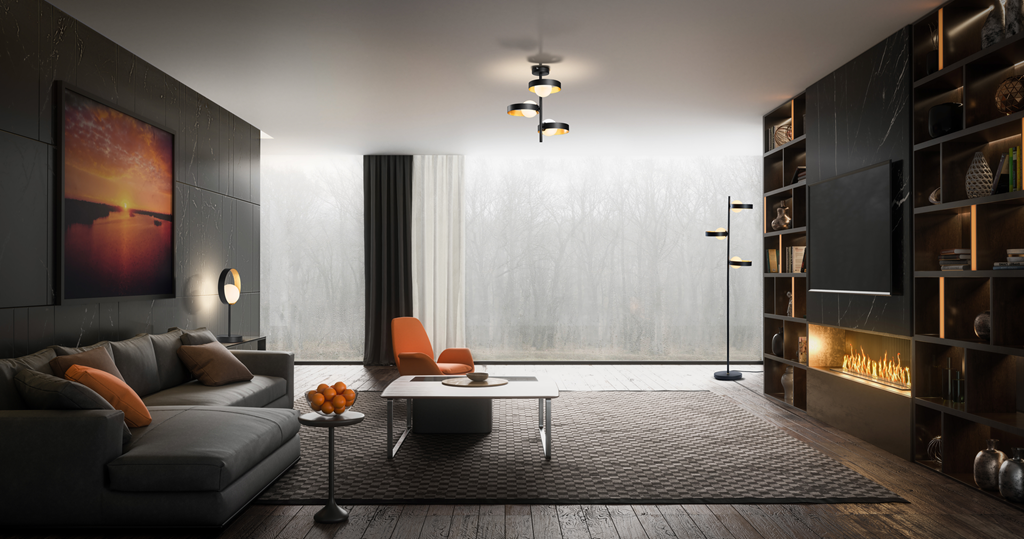
The placement of light sources is crucial for minimizing glare and creating a comfortable viewing environment. Avoid placing lamps or windows directly opposite the TV screen. Consider using sheer curtains or blinds to diffuse natural light during the day. Position lamps behind or to the side of the seating area, directing the light away from the screen. Experiment with different angles and heights to find the optimal placement for your specific room layout.
Natural Light: Harnessing the Sun’s Brilliance
Natural light can enhance your living room’s ambiance and create a sense of openness. However, it can also cause glare and wash out the TV screen. Utilize sheer curtains or blinds to filter and diffuse sunlight. Consider installing motorized shades or blinds that can be controlled with a remote or smartphone for convenient adjustments. During the day, position your seating area to minimize direct sunlight on the TV screen.
Specific Lighting Techniques for Different TV Content
The ideal lighting for your living room TV can vary depending on the content you’re watching. For movies, create a dim, intimate atmosphere with soft ambient lighting and bias lighting. When you enjoy sports, increase the ambient light slightly to enhance the excitement and energy. For gaming, consider dynamic lighting effects that sync with the on-screen action. Smart lighting systems offer pre-set scenes for different activities, allowing you to easily switch between lighting modes.
Budget-Friendly Lighting Solutions: Affordable Enhancements
Enhancing your living room TV lighting doesn’t have to break the bank. LED strip lights for bias lighting are relatively inexpensive and easy to install. Dimmable LED bulbs and plug-in dimmers offer affordable ways to control the brightness of existing lamps. Consider repurposing existing lamps or using inexpensive fabric shades to diffuse light. Even simple adjustments to lamp placement and window treatments can make a significant difference.
People Also Ask (FAQs)
-
What is the best color temperature for living room TV lighting?
- For ambient lighting, warm, neutral tones (2700-3000K) are generally preferred. For bias lighting, a color temperature close to 6500K (daylight) is recommended.
-
How do I reduce glare on my TV screen?
- Avoid placing lamps or windows directly opposite the TV screen. Use sheer curtains or blinds to diffuse natural light. Position lamps behind or to the side of the seating area. Consider using a matte screen protector.
-
Is bias lighting worth it?
- Yes, bias lighting significantly reduces eye strain and enhances perceived picture quality. It’s a relatively inexpensive and easy way to improve your TV viewing experience.
-
Can I use colored LED lights for bias lighting?
- While colored LED lights can create a fun atmosphere, they are not ideal for bias lighting. A neutral white light (6500K) provides the most accurate and comfortable viewing experience.
-
How bright should my living room TV lighting be?
- The brightness should be subtle and diffused, avoiding harsh shadows and reflections. Use dimmers to fine-tune the light output to suit your preferences and the content you’re watching.
-
What is the best type of lightbulb for my living room?
- LED bulbs are highly recommended due to their energy efficiency, long lifespan, and wide range of color temperatures and brightness levels.
-
Can smart light bulbs be used for bias lighting?
- Yes, smart light bulbs can be used for bias lighting, especially those that can be set to 6500K. Smart bulbs also allow for easy remote control and automation.
-
Does the size of my TV affect the lighting requirements?
- Yes, larger TVs require more ambient and bias lighting to create a balanced viewing experience. Ensure the light sources are appropriately sized and positioned to illuminate the entire screen.
Conclusion: Crafting Your Cinematic Sanctuary
Creating the perfect lighting for your living room TV is an art and a science. By understanding the principles of ambient, bias, and task lighting, and by considering factors like color temperature, CRI, and placement, you can transform your living room into a cinematic sanctuary. Experiment with different lighting techniques and technologies to find the combination that best suits your preferences and viewing habits. Remember that the goal is to create a comfortable, immersive, and visually pleasing environment that enhances your enjoyment of your favorite TV shows, movies, and games. With a little planning and effort, you can illuminate your entertainment and elevate your viewing experience to new heights.